

Need to dampen a wall, brush down fresh mortar or clean a plastering bucket? The right plastering brush depends on the job, not just the name on the label. Water brushes, brickies brushes and stiff cleaning brushes can look similar in a listing, yet they’re intended for different tasks.
Brush descriptions don’t always make those differences clear. Choosing by bristle type or size alone can leave you with a tool that doesn’t suit the work. This guide explains the main plastering-brush categories, how to compare them and what to consider when choosing a brush for a specific task.
You’ll also find practical care advice to help keep a brush clean and usable. For details such as a brush’s construction or suitability for a particular job, follow its product information rather than relying on assumptions. PFT Wales supplies professional plastering tools from Refina and Skimflex, alongside telephone technical advice for tradespeople.
Key Takeaways
- Match the brush to its task: applying water, cleaning containers and creating texture call for different approaches.
- Consider the surface, working area and access, then compare brush width and handle shape for the control you need.
- Remove residue promptly and follow the care guidance supplied with the specific brush.
- Check the product’s stated purpose before use, especially when choosing a brush for a particular material or surface.
What is a plastering brush, and what jobs can it do?
A plastering brush is a hand brush used for a particular plastering or site-cleaning task. It might apply water during relevant finishing work, clean a mixing container or stipple a surface to create texture. These jobs call for different brush behaviour, so don’t assume one brush suits all three.
Names can be confusing. A listing may use a general label such as “plastering brush” or a trade name that doesn’t explain the intended use. Look for the task stated in the product description, then consider whether the bristles and handle suit the work. A plasterer’s wider tool kit supports varied work, as outlined in this overview of the Plasterer trade.
A water brush applies water during relevant plastering work; a bucket-cleaning brush removes residue from containers and equipment. They aren’t interchangeable simply because both are used on site.
What does a water brush do in plastering?
A water brush applies water where it’s relevant to the work, including during some finishing stages. Its role depends on the surface, material and stage of the job. Choose a brush for that specific purpose rather than treating it as a general tool for wetting every surface or material. There isn’t one universal approach for every plaster or finish.
Start with the work in front of you. Applying water as part of finishing is different from scrubbing residue from a tub. Check the brush’s stated use, as its name alone may not explain how it is intended to be used or which tasks it suits.
How do bucket and stipple brushes differ?
A bucket brush is for cleaning mixing containers and related site equipment. Its job is to shift residue from a container, not to work a finished surface. A stipple brush, by contrast, is used to texture a surface. The effect depends on the brush and how it’s used, so the label describes the task rather than promising a particular pattern or finish.
Keep those roles separate. A brush selected for cleaning may not be suitable for finishing or texturing, where control and the intended surface result matter. When organising tools for a job, separate container-cleaning brushes from those intended to contact the work itself. Related mixing buckets and tubs are part of the same practical set-up, but cleaning them remains a separate task.
In short, begin with the brush’s purpose: water application, container cleaning or surface texturing. If a product description uses an unfamiliar name, check its stated use before deciding whether it belongs in your finishing kit or cleaning kit. This is more reliable than choosing by label alone.
Which plastering brush type suits each trade task?
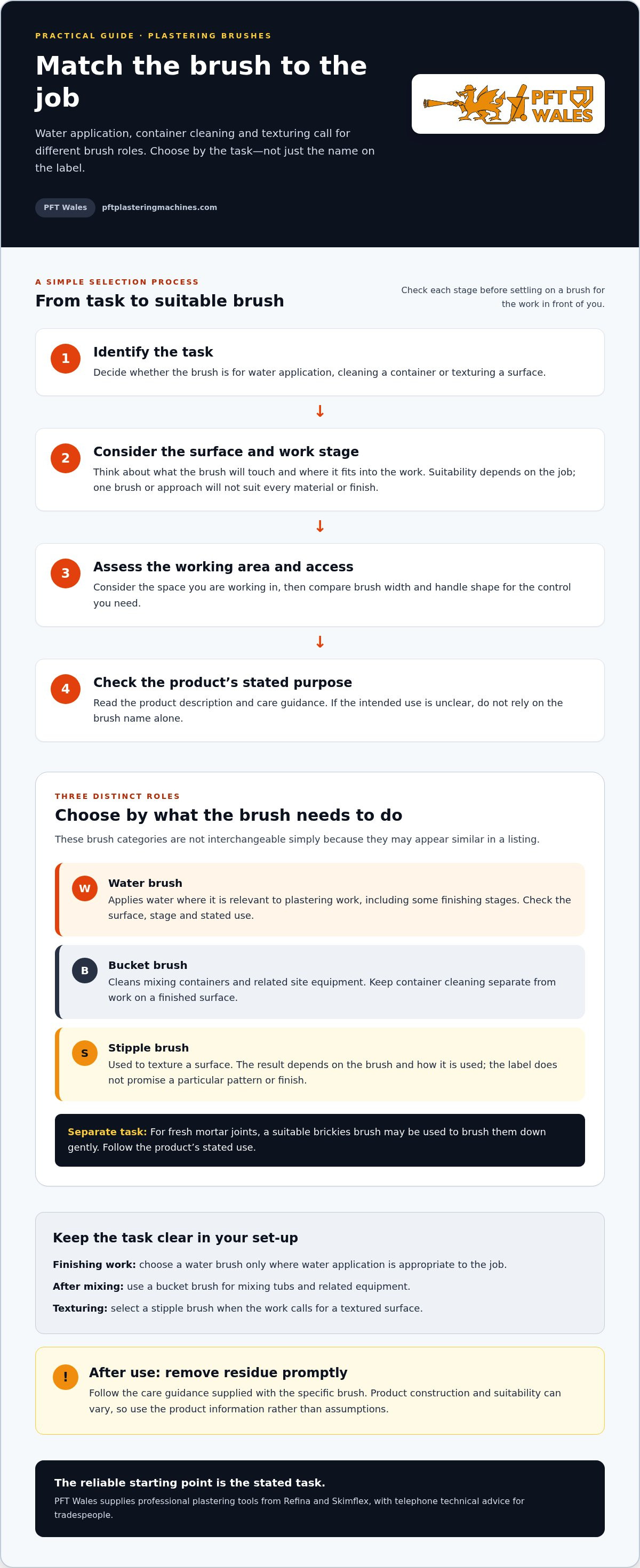
Choose by what the brush needs to do, not by a familiar-sounding label. A brush used around finishing work has a different role from one kept for cleaning the mixing tub, while a stipple brush is selected to texture a surface. If a listing doesn’t explain its intended task, the name alone may not tell you whether it belongs in your finishing kit or cleaning kit.
The surface and stage of work matter too. Traditional lime plaster, for example, can involve distinct coats and application methods, as described in the National Park Service guide to Lime Plaster in Historic Preservation. It’s a useful reminder that brush suitability depends on the work at hand, not on a rule that one type suits every plaster, render or surface.
Water brushes apply water during relevant plastering work; bucket brushes clean containers; stipple brushes texture surfaces.
When is a water brush the relevant choice?
Consider a water brush when water application forms part of the finishing work. Its role is tied to the surface and stage of the job, so don’t assume the same brush or approach suits every material or finish. Check the brush’s stated purpose and follow its product instructions. It isn’t a substitute for a bucket brush, even if both are used in the same work area.
For example, when finishing a surface, choose a brush intended for that kind of use rather than reaching for one used to scrub the tub. The application method depends on the job; this guide helps you choose a brush category, not prescribe a technique.
When should you use a bucket brush or stipple brush?
Use a bucket brush to clean mixing containers and related site equipment. A stipple brush has a different purpose: it’s used to texture a surface. A brush chosen for scrubbing equipment may not provide the action or control needed for texturing, and a brush intended for surface work isn’t automatically right for cleaning a container.
Keep the task clear when setting out tools. After mixing, the tub needs cleaning; where a textured effect is required, the relevant tool is a stipple brush. For fresh mortar joints, a suitable brickies brush may be used to brush them down gently. The tasks differ, so follow the intended use and product instructions.
- Finishing work: Choose a water brush only where water application is appropriate to the job.
- Container cleaning: Keep a bucket brush for mixing tubs and related equipment.
- Texturing: Select a stipple brush for work that calls for a textured surface.
If you’re comparing tools for a wider plastering set-up, PFT Wales supplies professional tools from Refina and Skimflex. Discuss your tool requirements with the team.
How to choose a plastering brush for the job
Work through the job before choosing a plastering brush. A brush that feels comfortable in the hand still needs to suit the task and working area. Use this sequence to narrow your options:
- Identify the task. Decide whether you need a brush for water application, cleaning or texturing.
- Consider the surface and work stage. Think about what the brush will touch and where it fits into the process.
- Assess the working area. Decide whether you need to cover an open area or reach a confined section, edge or corner.
- Think about handling. Consider the grip and control you need for the movements the task involves.
This gives you a shortlist before you compare individual brushes. Use stated product details to assess construction and intended use. Don’t assume a brush suits a particular material or surface just because its general category sounds appropriate.
What should you assess before choosing a brush?
Start with the task, then consider the working area and access. A brush used across an open section has different handling demands from one used in a tight corner or around an edge. Consider how much control the job calls for, and read the product description for confirmed details about intended use. If the information doesn’t establish suitability, don’t fill the gap with assumptions.
Keep the brush’s role in context. It’s one part of a wider kit that may include trowels, spatulas and floats. PFT Wales supplies professional plastering tools from Refina and Skimflex for tradespeople working across different tasks.
Do brush size, handle and bristles matter?
They matter as practical handling considerations. Brush width affects how much of the working area it covers at a time, while handle shape can influence how it sits in your grip and how easily you can guide it. Consider access and control, but don’t treat size or handle design as a guarantee of performance. A feature that helps with one task may not be the deciding factor for another.
Bristle construction can also affect a brush’s feel and intended use. Compare the details given for the brush with the demands of the job rather than assuming one type is always best. Natural and synthetic bristles have different characteristics, but the material alone doesn’t establish which is right for your task. Let the intended use lead, and use product information to guide the final choice.
How to use and care for a plastering brush sensibly
Deal with residue before it builds up, but don’t apply one cleaning routine to every brush. Care depends on the brush’s construction and intended task. Start with the instructions supplied with that tool, and follow any cleaning method they specify instead of making assumptions about bristles or materials.
Clean and store each brush according to its intended use and supplied care guidance. Keep finishing brushes separate from cleaning tools, and don’t treat every brush as if it were made for the same work.
What habits help keep a brush ready for work?
After use, remove residue promptly in line with the brush’s instructions. Dried material can be harder to remove. Don’t assume a particular solvent, soaking time or washing method is suitable unless the product guidance says so. Keep brushes used for finishing apart from those used to clean tubs or equipment, so residue isn’t carried into other work.
Store the brush somewhere clean where tools or site materials won’t contaminate the bristles. Avoid leaving weight on them or storing the brush in a way that crushes or bends them. Follow any storage advice supplied by the maker, and take care not to force the bristles into a shape they don’t naturally hold.
When should you stop using a worn or damaged brush?
Check the brush before using it for work where control matters. Noticeable damage, heavily misshapen bristles, a loose-looking handle or a change in how it behaves are reasons to pause and reassess. These signs don’t set a fixed replacement deadline, but they may indicate that the brush is no longer right for the task.
Don’t try to correct damage with an improvised repair or assume the brush will perform as intended once cleaned. Check the product guidance and seek trade advice if you’re unsure whether its condition is suitable for the work. There’s no universal service life for every brush, so assess its actual condition and intended use.
A practical routine can be kept simple:
- Remove residue promptly, following the brush’s supplied care guidance.
- Keep finishing brushes separate from those used for container cleaning.
- Store bristles where they won’t be crushed, bent or contaminated.
- Reassess any brush that is visibly damaged or no longer gives you appropriate control.
For help choosing professional plastering tools for your work, contact the PFT Wales team.
Choosing plastering brushes with practical trade advice
A useful brush choice starts with the work, not a brand name or a general preference for one type of bristle. Identify the task, surface, working area and level of control you need. Then compare those requirements with the brush’s stated purpose and product information. This gives you a practical way to assess options without assuming that one product suits every job.
Knowing what water, cleaning and texturing brushes are broadly intended for helps narrow the options, but it doesn’t establish that a specific brush is right for your surface or process. Consider the brush’s construction, intended use and supplied instructions. A category label alone isn’t enough to settle the choice.
How does a brush fit into the wider plastering tool kit?
A brush handles a particular task alongside other hand tools; it doesn’t replace them. For example, a brush used during relevant finishing work has a different role from tools used to spread or flatten material. A cleaning brush, meanwhile, helps keep containers and equipment in order. For more context on container use, see this guide to plastering buckets for trade use.
PFT Wales supplies professional tools from Refina and Skimflex, as well as other plastering tools. The plastering tools and equipment category gives an overview of that wider range.
What should you do if the right brush is still unclear?
Describe the task, surface and what you need the brush to do. If access or handling is part of the issue, include that too. These details give an experienced supplier a practical starting point for discussing your requirements, instead of guessing from a broad label or assuming a particular construction will suit.
PFT Wales provides telephone technical advice and supplies professional plastering tools, including Refina and Skimflex ranges. If you’re choosing a brush as part of a wider set-up, explain the work and tools involved. Keep the question specific: what is the brush for, what will it be used on, and what does the product information say?
Use task-first guidance to make an informed shortlist, then rely on product-specific details for the final choice. For help discussing your requirements, contact the PFT Wales team.
Make your next tool choice with confidence
Base your next brush decision on the job, not a familiar label or an assumption. If a particular plastering brush is difficult to assess, note the task, surface and intended use, then compare those details with the product information. Where suitability remains unclear, ask for advice rather than guessing.
PFT Wales is a specialist supplier of professional plastering and rendering tools, with telephone technical advice for tradespeople. The team can discuss a tool question in the context of the work you carry out, without treating general guidance as a recommendation for a specific brush.
Ready to talk through your requirements? Discuss your plastering tool requirements with PFT Wales.
Frequently Asked Questions
Is a plastering brush the same as a water brush?
No. A water brush is one kind of plastering brush, but the broader term can also describe brushes for other site tasks. Product names aren’t always consistent, so check the description for the stated purpose rather than relying on a category heading alone. When comparing listings, note whether each brush is described for water application, cleaning or another specific use.
Can I use an ordinary paint brush for plastering work?
Not automatically. A paint brush may not be intended for the task involved in plastering, and its suitability depends on the work and the brush’s own guidance. Applying a coating and carrying out a plastering task aren’t necessarily the same use. Check the product information before using it, particularly if bristle behaviour or surface contact could affect the result.
How do I soften a new plastering brush before using it?
Follow the instructions supplied with the brush, as there isn’t one verified break-in method for every type. Avoid improvised treatments, such as soaking or using a cleaning product, unless the manufacturer’s guidance recommends them. Before use, check the brush’s stated purpose and condition. If the instructions don’t explain preparation, seek advice rather than guessing.
Can a plastering brush be used to apply PVA?
Only if the brush’s product guidance supports that use. Suitability for PVA can’t be assumed from a general label or from the fact that a brush is used on site. Check the product information and any guidance for the material being applied. If those details don’t establish suitability, contact PFT Wales for trade advice before using a particular brush for the task.
Why are bristles coming loose from my plastering brush?
Loose bristles can have different causes, so their appearance alone doesn’t confirm what has happened. Check the brush for visible damage and review its care and use instructions. If bristles continue to come free, or the brush no longer gives you control, stop and reassess whether it’s suitable for the job. Avoid improvised repairs; seek product-specific or trade advice if you’re unsure.
Can one plastering brush be used for several different jobs?
That depends on the brush’s stated purpose and the jobs involved. A brush used for one task may carry residue or behave differently from what another task requires. For example, using a brush to clean a container and then for surface work risks transferring residue. Keep separate brushes where the intended uses differ, and follow the product guidance if you’re considering using one brush across tasks.