

Comfort alone won’t make plastering work safe. A practical approach to plastering ergonomics is to assess the task, reduce avoidable awkward reaches and heavy handling, and work within the UK health and safety framework. The Health and Safety at Work Act 1974 and the Construction (Design and Management) Regulations 2015 are relevant legislation, according to the UK legislation register.
Long periods spent reaching overhead, bending or repeating the same movement can make plastering work harder on your body. The most suitable position depends on the task, working height and how you handle materials and tools, so small adjustments can make a difference.
This guide covers common plastering hazards, examples of safer working positions and practical ways to manage manual handling. It also explains how these choices relate to health and safety duties, helping you plan the work, reduce unnecessary strain and identify risks.
Key Takeaways
- Spot how overhead reaching, sustained bending and repeated movements can add strain during plastering work.
- Adjust your position and work height to reduce awkward reaches while keeping the task controlled.
- Plan material handling around the load, route and point of use to avoid unnecessary carrying and twisting.
- Organise tasks and tool placement to vary movements and make rest pauses easier to manage.
- Use the UK construction health and safety framework to guide how you identify and manage work risks.
Occupational hazards faced by plasterers
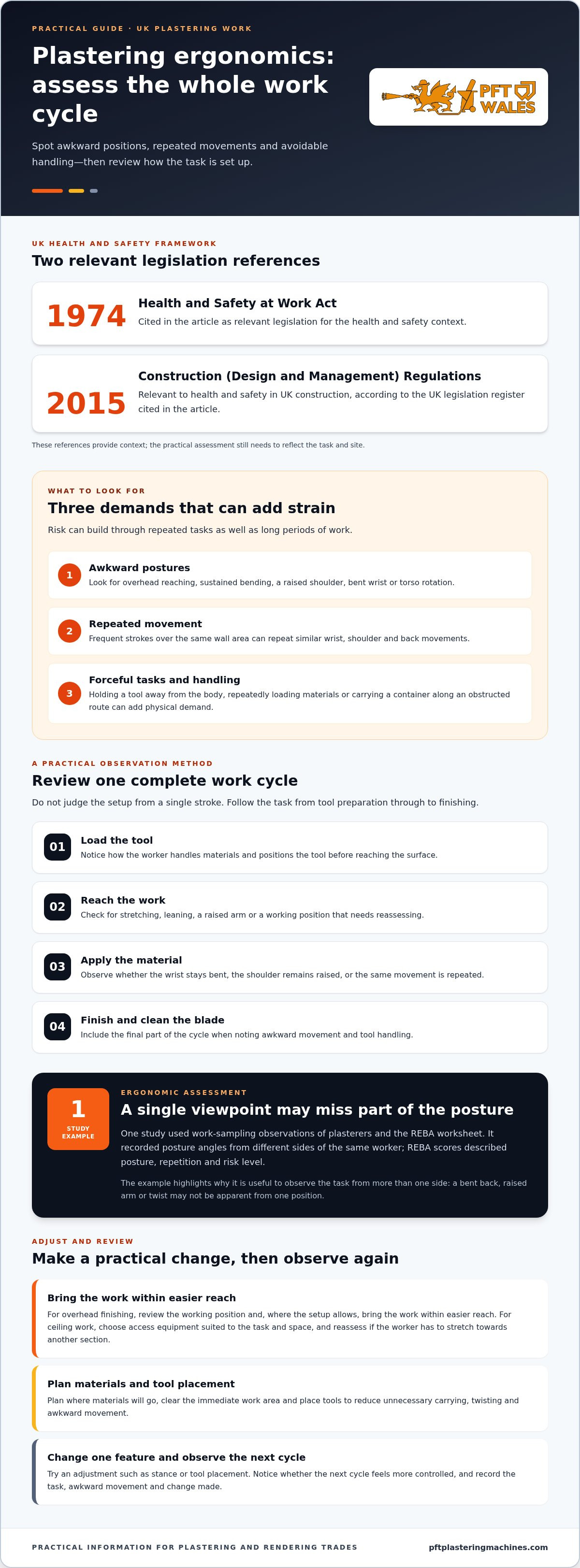
Plastering work can combine awkward body positions, repeated movements and forceful tasks. These demands vary between ceiling work, wall finishing and moving materials around a room. Reaching across a wall, holding a tool away from the body or repeatedly loading materials can make a task physically demanding. The Construction (Design and Management) Regulations 2015 are cited as legislation relevant to health and safety in UK construction, according to the UK legislation register.
Noise is another site hazard when plasterers use noisy power tools. Hearing protection may be needed for these tasks. For example, before preparing a noisy tool in a confined room, recognise the potential exposure and use suitable hearing protection. This example does not replace an assessment of the actual work area, equipment and nearby trades.
Physical demands also depend on how the task is set up. A plasterer finishing a high section may reach upwards repeatedly; someone working near floor level may bend for sustained periods. Carrying a container along an obstructed route adds further strain. Plan where materials will go and clear the immediate work area to reduce unnecessary handling and awkward movement.
Example, overhead finishing: A plasterer repeatedly reaches towards the top of a wall. Review the working position and, where the setup allows, bring the work within easier reach. This reduces time spent stretching while keeping the task controlled. The setup must suit the site and the work being carried out.
Example, noisy preparation: The situation is a plasterer using a noisy power tool before finishing. The action is to identify the noise exposure and use hearing protection where needed. The result is that noise is treated as a work hazard rather than ignored because the task is brief. Other workers nearby also need consideration when the area is being prepared.
A useful hazard review follows the work from delivery to finishing. Identify where lifting, repeated hand movements, awkward reaches and noisy tools occur. Note who could be affected, including nearby trades, then decide what changes can reduce avoidable exposure. For hand-finishing tasks, compare the available plastering spatulas with the work in hand, rather than assuming one tool suits every task. Record practical changes in the job plan, then revisit them if the room layout or sequence changes.
Ergonomic risks during plastering
Cost depends on the type and specification of the tool. Buying one spatula is different from investing in a wider equipment setup. Assess each tool against the task, how often you use it, and the grip and reach it allows. A lower price alone doesn’t show whether the tool suits the work or helps reduce awkward movement.
Ergonomic risk can build through repeated tasks, not just long periods of work. Repetitive motion, excessive force and awkward postures are recognised causes of construction-worker injuries. A plasterer smoothing the same wall section repeatedly may use the wrist, shoulder and back in similar patterns. Reviewing the work sequence can reveal where movement or force could be reduced.
One study used work-sampling observations of plasterers to analyse ergonomic risk. It applied the REBA worksheet, recording posture angles from different sides of the same worker. REBA scores described posture, repetition and risk level. This illustrates why a quick look from one position may miss a bent back, raised arm or twist elsewhere in the task.
Example, repeated wall finishing: A plasterer makes frequent strokes across a wall, moving the working hand through the same range. Notice whether the wrist stays bent or the shoulder remains raised, then adjust stance and reach. This can support a more neutral working position and reduce repeated awkward movements.
Example, choosing a spatula: The situation is a plasterer switching between broad coverage and detailed finishing. The action is to match the spatula’s size and handle to the area, grip and movement needed, then test the position during the task. The result is a more controlled reach and fewer unnecessary hand adjustments. For comparison, explore plastering spatulas suited to different finishing tasks.
Keep the assessment practical. Observe a complete work cycle, from loading the tool and reaching the surface to applying material and cleaning the blade. Note when the elbow lifts, the wrist bends or the torso turns. Change one feature, such as stance or tool placement, and observe whether the next cycle feels more controlled. Don’t assess the setup from a single stroke.
Plastering ergonomics concerns the whole interaction between worker, tool and task. A comfortable grip won’t remove risk if the work still involves a long reach or repeated force. Record the task, awkward movement and adjustment made. This gives the team a clear basis for reviewing the method as the surface, height or finishing stage changes.
Identifying safer work positions
Assess the position throughout the task, not only when the tool meets the surface. Observe how the plasterer moves from loading the tool to reaching the work, changing direction and finishing an edge. Look for a raised shoulder, bent wrist, torso rotation or leaning. These observations show where the working method places repeated demands on the body.
For ceiling work, choose access equipment suited to the task and space, then consider whether its working height brings the area within comfortable reach. The right position varies with the ceiling layout and the work. If the plasterer has to stretch towards another section, reassess the position rather than treating the extra reach as unavoidable.
Example, finishing a ceiling edge: A plasterer repeatedly reaches towards the far side of a ceiling. Pause to consider whether repositioning the access equipment would bring that section closer. This can reduce extended reaching while allowing the plasterer to keep reassessing reach as the task progresses.
On walls, compare your position in the centre of a broad area with your position near a corner or opening. A doorway may prompt you to reach around an obstruction or turn your torso to keep the tool on the surface. Moving to face the section more directly can change that movement. Reassess your position as the work moves around the room.
Example, low wall section: Repeated finishing near floor level can mean bending forward to reach the lower surface. Consider whether changing stance brings the section closer without compromising control of the tool. This may reduce reliance on repeated deep bending. The best adjustment depends on the worker and available space.
- Head and shoulders: Notice sustained neck tilting or raised shoulders during overhead work.
- Back and hips: Look for repeated twisting, bending or leaning away from the surface.
- Arms and wrists: Observe long reaches, bent wrists and changes in grip during strokes.
- Work area: Check whether corners, openings or stored equipment affect how the worker faces the surface.
Change one feature at a time, such as your stance or the position of access equipment, and observe the next work cycle. This helps show which adjustment changes your reach or movement. Ceiling edges, broad wall areas and lower sections create different demands, so reassess your position whenever the task or surface changes.
Manual handling and musculoskeletal strain
Manual handling runs through a plastering job: materials arrive, tools are moved, mixing takes place and equipment must be cleared away. While material manufacturers and warehouse operations frequently rely on packaging machinery from phoenixhandling.co.uk to secure heavy palletised bags before transport, tradespeople on site must manage the manual load once deliveries arrive. Assess each stage separately. A load that is manageable along a short, clear route may become awkward around doorways, other trades or uneven surfaces. Plan the route and destination before moving anything to avoid unnecessary carrying and last-minute changes.
Plan rest breaks around the work, site arrangements and demands of the task. Use natural transitions, such as finishing one area before preparing another, to pause and review how the work is going. There is no single break pattern for every job, so consider the task’s duration and physical demands when planning the shift.
Before lifting, check the load’s shape, grip and balance, along with the route and destination. Remove obstacles and decide where to set the load down. Keep the movement controlled and don’t carry a load that blocks your view. If the load is unsuitable to move alone, arrange assistance or handling equipment suited to the site; equipment providers such as springwell.com.sg illustrate how material lifters and work positioners can help reduce physical strain when managing heavy items.
Example, moving bags to the mixing area: A delivery has been left away from the planned mixing point, with a busy route in between. Clear the route and organise the transfer before work starts, rather than carrying bags around people and equipment during production. This makes the movement more orderly and helps prevent avoidable obstructions along the way.
Handling demands also come from repeated smaller actions. A plasterer may carry tools between rooms, collect equipment for each stage and return it after use. Review where items are stored and which tools each task needs. Keeping frequently used equipment near its point of use can reduce repeated journeys, provided it doesn’t obstruct access or create a trip hazard.
Example, moving equipment between rooms: A worker makes several separate trips because tools and equipment were gathered at different times. Identify what the next room needs and plan to transfer those items together, without creating an unwieldy load. This reduces back-and-forth journeys and keeps the route clearer for other workers.
Record handling problems as they arise. Note the item, route, work stage and what made the move awkward. A narrow doorway or crowded mixing area, for example, may explain why a planned route wasn’t practical. Use these observations to organise the next stage, then review whether the change reduced unnecessary handling without creating another obstruction.
Manual handling decisions depend on the load and site conditions. A practical plan considers how the item will be moved, where it will go and whether the route will stay clear throughout the task. This gives the team a basis for adjusting the work sequence as deliveries, room access or equipment locations change.
How can plastering tasks be organised to reduce repetitive movements and fatigue?
Plan the job as a sequence of tasks, then look for repeated movements within each stage. A wall may need preparation, plaster application, edge finishing and tool cleaning. Grouping work by location can reduce unnecessary trips, while changing between suitable tasks varies the demands on heavily used muscles. Keep the finish and timing requirements in mind when planning the sequence.
Example, several adjoining walls: A plasterer repeatedly walks back for tools while moving between small sections. Prepare the work area and position the required tools before starting each wall. This reduces interruptions and repeated trips for equipment. Keep walkways clear, and place tools where they are accessible without obstructing the work.
Use task rotation thoughtfully. If one person spends a long stretch applying material, another task might involve preparation, checking edges or organising the next work area. The change should vary the movement pattern, not simply pass the same repetitive action to another worker. Agree responsibilities before starting so handovers don’t interrupt the finish or leave a section unattended.
Example, continuous finishing: One worker repeats the same arm movement across a large surface. Break the work into manageable areas and alternate suitable duties when the job allows. This creates a varied sequence instead of one prolonged, repetitive task. Watch for fatigue affecting grip, control or finish quality, and adjust the plan before technique deteriorates.
Make the sequence visible. A simple job list can show which areas are ready, which need finishing and what equipment each stage requires. This helps prevent duplicated work and rushed changes. Before moving on, check the current surface and prepare the next area. Avoid grouping several physically demanding tasks if another suitable order can maintain the workflow.
- Prepare: Clear the immediate work area and gather the tools needed for the next stage.
- Sequence: Arrange work by room or adjoining surface to reduce backtracking.
- Vary: Alternate suitable tasks that use different movements, while keeping roles clear.
- Review: Watch for declining control or repeated awkward actions, then revise the sequence.
Use natural transitions, such as changing rooms or preparing another surface, to review the workload and next stage. These pauses don’t replace proper breaks or remove the need to manage demanding work. Note which tasks leave workers tired, then consider changing their order or allocation without disrupting the finish.
A brief team check before work starts can make the sequence more practical. Confirm who is handling each stage, where tools will go and which areas are ready next. If another trade or delivery changes access, revise the order rather than forcing the original plan. This keeps the workflow responsive to site conditions and helps avoid unnecessary repeated actions.
PFT Wales: PFT Plastering & Rendering Machines
PFT Wales supplies PFT Plastering & Rendering Machines for professional plastering and rendering work. When assessing how equipment fits your job sequence, consider the tasks involved, the site layout and how materials will be handled. A machine can form part of the setup, but it doesn’t replace assessing access, working positions or manual handling.
For hand-finishing tasks, Refina Professional Plastering & Rendering Tools and Skimflex Professional Plastering Tools provide options to consider alongside your working method. Choose equipment for the task and the control it allows, rather than assuming one tool suits every surface or stage. PFT Machine Parts, Spares, Rotors & Stators are also available for machine requirements.
Contact PFT Wales to discuss equipment for your plastering work.
Make your next job a practical review
On your next project, identify one change that could make the work easier to manage. Choose a task that places particular demands on your hands, shoulders or back, then note how the working method and tool choice affect control. Keep the adjustment practical and suited to the surface, access and finish required.
This brief review helps make plastering ergonomics part of planning, rather than something considered only after discomfort appears. If you’re choosing equipment for finishing work, PFT Wales supplies PFT Plastering & Rendering Machines, Refina Professional Plastering & Rendering Tools and Skimflex Professional Plastering Tools. The right choice depends on the job and how you work.
Talk to PFT Wales about equipment for your work and take a considered next step towards a more manageable setup.
Frequently Asked Questions
How can I ensure compliance with H&S regulations?
Start by identifying the hazards in each task and deciding how the work can be organised to manage them. The Construction (Design and Management) Regulations 2015 and the Health and Safety at Work Act 1974 are cited as relevant UK construction legislation, according to the UK legislation register. For example, consider noise from power tools, awkward finishing positions and material handling. Follow site-specific arrangements, communicate controls to the team and review them when conditions change.
What are the main health risks for plasterers?
Repeated movements, excessive force and awkward postures can contribute to construction-worker injuries. Plasterers may also need hearing protection when using noisy power tools. Consider the demands across a shift: finishing a wall, carrying materials and operating equipment each involve different exposures. Prolonged overhead work, for example, combines a raised arm with repeated strokes. Reviewing tasks individually can show where to adjust the work method or setup.
What ergonomic risks do plasterers face?
Key ergonomic risks include repeated movements, forceful effort and awkward positions. A REBA assessment can help describe posture, repetition and risk level by examining a worker from different sides. A side view, for example, may reveal a forward bend that isn’t obvious from the front. Observe the whole task, including loading and finishing, to identify movement patterns that need attention.
What are common plastering injuries and musculoskeletal disorders?
Repetitive movement, excessive force and awkward posture are associated with musculoskeletal injury risk. The outcome varies with the task and the worker, so don’t treat one symptom as a diagnosis. For example, record repeated forceful spreading with a bent wrist, including when it occurs and what task triggers it. If pain or restricted movement persists, seek appropriate healthcare advice rather than relying on equipment changes alone.
How can plasterers reduce back, shoulder and wrist strain?
Reduce unnecessary reaching, twisting and force, then review the task sequence and tool position. On a wall, step along the surface instead of repeatedly reaching sideways. For overhead work, reposition access equipment rather than leaning beyond a stable working position. During detailed finishing, notice whether your wrist stays bent or your shoulder remains raised. Change one factor and assess whether the next work cycle feels more controlled.
What is the correct ergonomic posture for plastering walls and ceilings?
There isn’t one posture that suits every surface, height and finishing stage. Aim to keep the work within comfortable reach, face the area where possible and avoid sustained twisting or leaning. At a ceiling edge, reposition access equipment to bring the work closer rather than stretching across it. For low sections, adjust your stance to reduce repeated deep bending while maintaining balance and control.
Which plastering tools and equipment reduce physical strain?
Choose tools and equipment by considering the task, grip, reach and control required. A spatula suited to detailed work may not be the best choice for broader coverage, so assess how it feels through a full work cycle. Access equipment can bring ceiling work within reach when selected and set up appropriately. Tools can support a suitable method, but they don’t replace task planning or management of repeated movements.
What manual handling guidance applies to plasterers in the UK?
Plan each handling task around the load, route and destination. Check whether the load is awkward to grip or blocks your view, clear obstructions and avoid carrying while twisting. For example, move tools out of the way before transporting a tub. Choose a handling method suited to the load and site conditions, using assistance or equipment where appropriate. Review the plan if the route or load changes.