

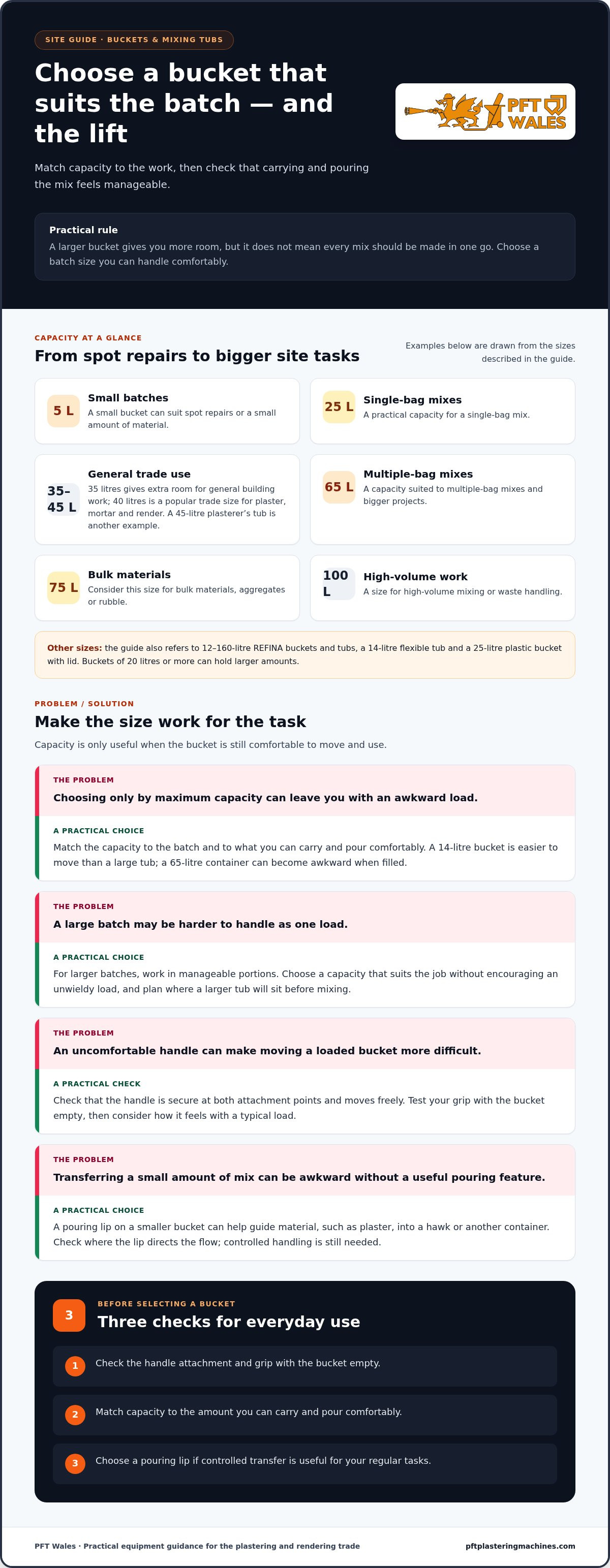
Trade plastering buckets and mixing tubs are available in capacities from 12 to 160 litres, with 25-, 40- and 65-litre options suited to common mixing and site-use needs. A 5-litre bucket can handle small batches or spot repairs, while 75- and 100-litre sizes suit bulk materials and higher-volume work. Smaller buckets often have a pouring lip, and the handle and pouring features affect how easily you can move and dispense a mix.
Choosing the right capacity is practical: match the batch size to the job without making the bucket awkward to handle. A larger bucket offers more room, but that doesn’t mean every mix should be made in one go.
This guide explains which sizes suit different tasks and what to consider when comparing handles and pouring features. Use these points to choose a bucket for regular jobs, small repairs or heavier site use.
Key Takeaways
- Match bucket capacity to your usual batch size and the way you handle mixes on site, rather than choosing solely for maximum volume.
- Compare handle comfort and pouring control with the tasks you do most often, especially when transferring a mix or carrying a loaded bucket.
- For larger batches, consider working in manageable portions to help keep the mix consistent and the bucket easier to handle.
- If your work also calls for machine equipment, PFT Wales supplies PFT Plastering & Rendering Machines for plastering and rendering trades.
Available capacities
Plastering buckets and mixing tubs range from small repair sizes to large-capacity site tubs. Buckets around 5 litres suit small batches and spot repairs, while 25 litres is a practical choice for single-bag mixes. A 35-litre bucket gives extra room for general building work; 40 litres is a popular trade size for plaster, mortar and render.
For a practical demonstration of mixing plaster in a bucket, watch this video:
For larger batches, choose a capacity that suits the work without encouraging an unwieldy load. Buckets of 20 litres or more can hold larger amounts, while 65 litres suits multiple-bag mixes and bigger projects. Consider 75 litres for bulk materials, aggregates or rubble, and 100 litres for high-volume mixing or waste handling.
REFINA plastering buckets and mixing tubs span 12 to 160 litres. Other examples include a 14-litre flexible tub, a 25-litre plastic bucket with lid and a 45-litre plasterer’s tub. Browse mixing buckets and tubs to compare available sizes for your work.
Handles and pouring features
A handle affects how easily you can carry a bucket from the mixing area to the workface. Before use, check that it is secure at both attachment points and moves freely. Test your grip with the bucket empty, then consider how the handle feels with a typical load.
Capacity matters here. A 14-litre bucket is easier to move than a large tub, while a 65-litre container can become awkward when filled. Choose a size you can handle comfortably for the task, rather than relying on capacity alone. For a larger tub, plan where it will sit before mixing.
Smaller plasterers’ buckets often have a pouring lip, which can help guide a small amount of material, such as plaster, into a hawk or another container. Check where the lip directs the flow and whether its shape suits the transfer. A pouring feature does not replace controlled handling.
Before selecting a plastering bucket, consider three practical points:
- Check the handle attachment and grip with an empty bucket.
- Match the bucket’s capacity to the amount you can carry and pour comfortably.
- Choose a pouring lip if controlled transfer is useful for your regular tasks.
For occasional spot repairs, a smaller bucket with a lip may be easier to position. For larger site tasks, focus on manageable handling and a steady, controlled pour.
PFT Wales: PFT Plastering & Rendering Machines
If you’re considering machine-based plastering or rendering alongside hand tools, PFT Wales supplies PFT Plastering & Rendering Machines. Explore the range to find equipment suited to the work you carry out.
For hand finishing, PFT Wales supplies Skimflex Professional Plastering Tools and plastering and rendering tools, including trowels, spatulas and floats. PFT Machine Parts, Spares, Rotors & Stators are also available. If you need help identifying a machine part, ask PFT Wales for advice.
Contact PFT Wales to discuss your equipment needs.
Choose equipment that supports your next job
The right kit should suit the way you mix, move and finish material on site. When reviewing your setup, consider whether hand tools meet your workload or machine-based plastering and rendering equipment would suit your next step. A plastering bucket is one part of the setup, alongside the tools and equipment used across the job.
PFT Wales supplies PFT Plastering & Rendering Machines, Refina Professional Plastering & Rendering Tools and Skimflex Professional Plastering Tools. They serve different purposes, from machine application to hand finishing, so choose according to the work you carry out.
For guidance on your equipment needs, contact PFT Wales about plastering buckets. A considered choice helps you head into the next job with confidence.
Frequently Asked Questions
What are plastering buckets made from?
Plasterers’ buckets are often made from strong polyethylene or recycled polypropylene.
Where can I buy a plastering bucket in the UK?
PFT Wales supplies plastering buckets. Contact the team to discuss your equipment needs.