

You're halfway up the scaffold, a full hopper of monocouche is beginning to set, and your pump motor abruptly grinds to a halt. In that sinking moment, guessing your next move can mean the difference between a five-minute fix and a written-off mix. Practical pft machine repair isn't about trial and error; it's about knowing exactly what to check before panic sets in.
Every plasterer and renderer knows the frustration of unexpected site downtime. Trying to work out whether a sudden stall stems from a drop in water pressure, an electrical fault, or a worn-out rotor can easily derail your entire schedule. In this guide, you'll learn how to diagnose common mechanical issues, carry out safe on-site fixes, and source genuine replacement parts with confidence. We'll outline a systematic diagnostic process that clearly separates simple consumable maintenance from specialist workshop repairs, keeping your machinery compliant, reliable, and ready to spray.
Key Takeaways
- Systematic on-site fault finding helps you quickly isolate electrical trips, water pressure drops, and blockages before stripping down machinery.
- Knowing the clear boundary between routine consumable changes and complex workshop overhauls prevents accidental motor damage and guides safe pft machine repair.
- Abrasive rendering aggregates accelerate wear on mixing shafts and pump units; spotting early friction wear keeps your mix consistency uniform.
- Using chassis data plates and official exploded schematics ensures you identify exact genuine PFT part numbers rather than risking unreliable pattern copies.
- Routine workshop servicing and preventative maintenance keep continuous mixing pumps fully compliant with PUWER regulations and dependable under demanding site schedules.
Diagnosing Common PFT Machine Breakdown Symptoms on Site
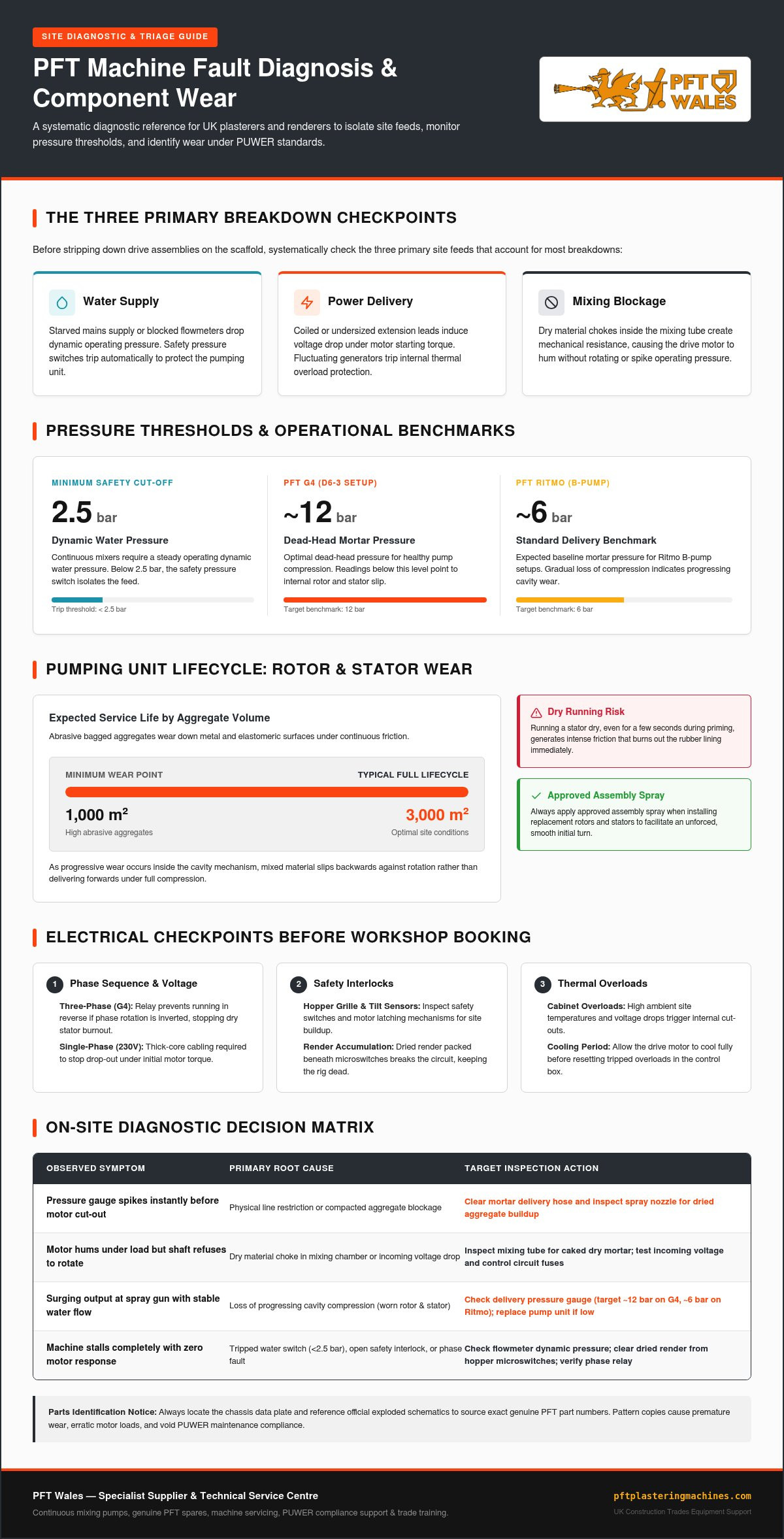
When a machine stalls mid-spray, tearing it apart on the scaffold is the quickest way to waste hours. Effective pft machine repair starts with systematic triage before you pick up a spanner. Most site breakdowns boil down to three root causes: starved water supply, erratic power delivery, or physical blockages inside the mixing zone. Rushing to strip the drive motor when the problem is simply low mains pressure only prolongs site downtime.
Before uncoupling heavy components, check your primary site feeds. Continuous mixers demand steady voltage; long, coiled extension leads cause severe voltage drops under load, tripping the machine's thermal overload switches. Similarly, fluctuating site generators can starve the controls. If the motor hums without rotating, check whether the mixing tube is choked with dry material before assuming the drive motor has burnt out.
"If the pressure gauge spikes instantly before the motor cuts out, clear the line for an aggregate blockage; if the motor refuses to turn against a free mixing shaft, inspect your incoming voltage and control circuit fuses."
Identifying Inconsistent Material Flow and Pressure Fluctuations
Surging output at the spray gun usually points to pressure instability or hydraulic wear rather than a motor breakdown. First, inspect the spray nozzle; dried aggregate buildup distorts the spray pattern and creates artificial back-pressure. Next, check your water flowmeter. PFT continuous mixing pumps require a steady dynamic operating water pressure of at least 2.5 bar; if incoming pressure drops below this threshold, the safety pressure switch will trip the feed to protect the pump.
If water flow is stable yet delivery remains weak, look at the delivery gauge. On a PFT G4 with a D6-3 setup, healthy mortar pressure should reach a dead-head reading of around 12 bar, while a Ritmo B-pump typically maintains 6 bar. Gauges dropping below these levels usually highlight a worn rotor and stator within the progressing cavity pump mechanism, allowing mixed render to slip backwards rather than pumping forwards under compression.
Electrical Cut-Outs and Motor Starting Failures
When a continuous mixer refuses to fire up at all, mechanical damage is rarely the primary suspect. UK construction sites present notoriously harsh conditions for sensitive control gear. Walk through these simple electrical checkpoints before booking a workshop visit:
- Phase Sequence and Voltage: Three-phase machines like the PFT G4 feature phase-monitoring relays. If phase rotation is reversed, the pump won't run in reverse, preventing dry stator burnout. Single-phase 230V units require thick-core cables to stop drop-out under initial motor torque.
- Safety Interlocks: Inspect the hopper safety grille, tilt sensor switches, and motor latching mechanisms. Dried render packed under safety microswitches breaks the control loop, keeping the machine dead.
- Thermal Relays: Allow the motor to cool fully before resetting tripped overloads inside the control cabinet.
Systematically checking these basic parameters eliminates external site factors, keeping on-site pft machine repair straightforward, safe, and focused on genuine mechanical faults.
Core Mechanical Subsystems: Causes of Wear and Failure
Pumping heavy bagged aggregates under continuous pressure creates relentless friction. Over time, coarse sand particles grind away metal and elastomeric surfaces alike, turning minor component wear into major mechanical breakdowns if ignored. Aligning your daily checks with HSE work equipment maintenance guidance not only keeps your rig operating safely under PUWER standards, but also protects vital subsystems against unnecessary strain. Successful pft machine repair relies on spotting this mechanical fatigue before it damages the primary drive line.
The Pumping Unit: Rotors, Stators, and Drive Shafts
The rotor and stator assembly takes the brunt of the daily workload. Depending on aggregate abrasiveness, a genuine set typically processes between 1,000 and 3,000 m² before losing compression. Running this unit dry, even for a few seconds during priming, generates intense friction that burns out the stator rubber immediately. Always apply approved assembly spray when installing replacement rotors and stators to ensure a smooth initial turn.
Beyond the pump jacket, inspect the drive claws and mixing shaft weekly. If abrasive materials round off the drive dogs or the mixing shaft develops lateral play, torque transfer becomes uneven. This vibration quickly transfers back into the gearbox, wearing oil seals and placing uneven loads on the motor bearings.
Water Delivery and Air Compressor Assemblies
Fluctuations in mix consistency frequently trace back to contaminated site water bowsers rather than electrical pump faults. Fine silt can bypass coarse screens and settle inside the water solenoid valve, preventing it from seating cleanly or choking delivery to the mixing tube. Back-flush your inline fine filter daily and verify that the pressure reducer maintains a smooth feed above the critical 2.5 bar dynamic threshold.
Air delivery requires equal attention. When compressor pressure drops, the spray pattern collapses into heavy spatters. Check the air line couplings for worn rubber seals and inspect the non-return valve on your spray gun. A failed valve allows wet render to push backwards into the air line, quickly seizing internal compressor valves. If troubleshooting these mechanical systems leaves you uncertain, contact our workshop specialists for dedicated technical support before dismantling complex components.
On-Site Triage vs Professional Workshop Repair: Knowing the Boundary
Working on an active site tempts many tradespeople to strip machinery right where it stands. However, tackling high-pressure rendering pumps requires strict safety discipline. Following internationally recognised benchmarks like OSHA equipment and tool safety standards alongside UK PUWER guidelines means isolating power sources and depressurising delivery lines before attempting any mechanical intervention. Knowing where practical site triage ends and workshop intervention begins is the core of smart pft machine repair.
Opening sealed reduction gearboxes or electrical enclosures on a dusty, windy scaffold introduces fine airborne grit directly into precision assemblies. Contaminating synthetic gear oil or exposing sensitive control boards to moisture frequently turns a minor maintenance hiccup into an expensive, catastrophic failure.
"Attempting improvised repairs on 400V control cabinets or sealed drive gearboxes without specialist test benches risks frying expensive control boards and creating severe electrical safety hazards on site."
Field-Fixable Maintenance: What the Operator Can Resolve
Most common daily stoppages belong firmly within the operator's scope. You don't need a certified workshop appointment to address routine line interruptions or replace standard wearing components:
- Clearing Hose Blockages: Always isolate the motor and dump line pressure via the mortar gauge bleed cock before disconnecting couplings. Reverse-flushing with water or tapping hoses to locate compacted aggregate plugs solves most delivery stalls.
- Replacing Wear Parts: Swapping out rounded mixing paddles, eroded spray nozzles, worn cam-lock gaskets, and spent pump units should be performed right at the mixing station using proper assembly lubricants.
- Basic Filter Servicing: Cleaning inline water strainers, blowing out compressor air intake sponges, and cleaning solenoid dirt traps keep operating pressures steady.
When Workshop Intervention Is Essential
Certain faults demand dedicated workshop testing rigs, pullers, and diagnostic equipment. If you notice persistent oil dripping from the motor flange, the gearbox input shaft seal has likely deteriorated, requiring prompt replacement before internal teeth strip under heavy mixing loads. Similarly, electrical gremlins involving burnt motor windings, malfunctioning frequency converters on single-phase machines, or internal wiring continuity faults should never be tackled with site multi-meters.
When mechanical diagnostics reveal internal bearing wear, transmission play, or intractable electrical trips, contact the technical repair team to arrange a thorough workshop overhaul by appointment.
Sourcing Genuine PFT Replacement Parts Using Technical Schematics
Fitting pirate or pattern parts to high-pressure continuous mixers is a false economy. Cheap copycat components rarely match original manufacturing tolerances. Inferior rubber compounds in third-party stators wear out prematurely under abrasive aggregates, while out-of-spec mixing shafts place destructive lateral strain on drive gearboxes. Proper pft machine repair relies on authentic German-engineered spares built to withstand relentless site conditions. For in-depth technical details on component compatibility, explore our comprehensive guide to PFT machine spares.
Accurate parts sourcing begins with the chassis data plate riveted to your machine's frame. This plate records the precise model designation, manufacturing year, and unique serial number. Because PFT continuously refines internal components across generations, knowing your exact build year ensures you don't order a switchgear component or water block meant for a different revision.
How to Read PFT Parts Drawings Accurately
Rather than guessing component descriptions over the phone, exploded assembly diagrams allow you to trace every mechanical assembly down to the individual washer. These schematics break the machine into distinct subsystems: the mixing tower, chassis running gear, water control manifold, and electrical cabinet. Always cross-check whether your machine is a 230V single-phase or 400V three-phase model, as electrical contactors, motor overloads, and capacitors vary significantly between configurations. Check our official plastering machine parts drawings to identify the exact OEM part numbers before purchasing.
Ordering Spares and Express Part Dispatch
Downtime drops dramatically when you carry a small breakdown kit in your van. Experienced contractors always keep spare cam-lock gaskets, water filter screens, spray nozzles, and control fuses close at hand. You can procure critical hardware directly through our small parts for machines catalogue to keep your kit fully stocked.
When an unexpected breakdown requires specialised hardware, you don't have to wait weeks for regular stock replenishment. Urgent components not held on the shelf in the UK can be express-ordered directly from the PFT factory in Germany for swift delivery. If you're struggling to locate a specific part number on your machine schematic, contact our technical team today for direct assistance with parts identification and orders.
Professional PFT Servicing: Preventing Costly Site Breakdowns
Treating routine maintenance as an afterthought guarantees project delays. Plastering and rendering pumps run under severe hydrostatic pressures, meaning minor component neglect rapidly cascades into costly mechanical failures. Investing in scheduled preventative maintenance safeguards your daily reliability, keeps machines fully compliant with statutory PUWER regulations, and protects strong resale value when updating your plant fleet. Structured upkeep turns reactive panic into predictable, efficient pft machine repair.
The Preventative Maintenance Schedule
Downtime drops significantly when your site team sticks to disciplined maintenance intervals. Implement this structured timetable to protect your machinery from premature wear:
- Daily Shutdown Routines: Thoroughly wash out the mixing zone at the end of every shift. Drop the mixing tube, extract the shaft, and scrape all crusting render away. Hardened material left overnight acts like concrete against the motor drive claws during morning start-up.
- Weekly Plant Checks: Grease all specified lubrication points and inspect cam-lock couplings for damaged rubber gaskets. Test site power leads and RCD switches for physical damage or heat discolouration.
- Annual Workshop Servicing: Bring your machine into a dedicated workshop once a year or between major contracting seasons. Specialist technicians measure pump clearances, refresh gearbox lubricants, inspect water solenoid seals, and test control circuits on calibrated diagnostic rigs.
Booking Professional Servicing and Technical Support
When unfamiliar site symptoms arise, guessing your way through complex machinery wastes precious daylight. Immediate technical consultation often clarifies whether a delivery stutter requires a simple water strainer flush or deeper workshop attention. Speaking directly with seasoned machine technicians helps you isolate mechanical anomalies quickly, keeping your crew spraying rather than waiting on idle scaffold.
If your machine requires detailed diagnostic testing, control box repairs, or complete mechanical overhauls, arranged workshop servicing provides minimal turnaround time. Dedicated workshop bays ensure your equipment is stripped, inspected, repaired with authentic parts, and load-tested under rigorous conditions. To book your machine into our workshop or discuss technical troubleshooting with our team, contact our specialist service technicians today.
Maximise Machine Uptime and Protect Your Rendering Schedule
Site breakdowns don't have to stall your entire contract. By applying a methodical diagnostic approach, you can quickly separate simple consumable wear from complex mechanical issues, keeping your projects moving forward. Always rely on authentic spares sourced through official schematics; fitting genuine parts ensures proper factory tolerances and guards your continuous mixer against premature motor burnout.
When mechanical or electrical faults run deeper than routine site triage, expert workshop care keeps your equipment compliant and dependable. As an authorised PFT dealer with 16 years of specialist trade experience, we support UK contractors with comprehensive workshop servicing by appointment, practical technical advice, and direct supply of genuine components, backed by express ordering from Germany for urgent parts. Don't risk expensive downtime or uncertified fixes on active scaffolding. Contact our specialist PFT technical team for repair advice and workshop bookings to keep your pft machine repair straightforward and your machines working at peak performance.
Frequently Asked Questions
What should I check first if my PFT plastering machine suddenly stops running on site?
Check your external water supply and incoming electrical power before dismantling any components. Confirm that dynamic water pressure meets the required 2.5 bar threshold; otherwise, the internal safety switch prevents operation. Next, examine site extension leads for voltage drop and inspect the hopper safety grille to ensure dried render isn't pressing the interlock switch. Most sudden site stalls stem from external supply interruptions rather than internal motor failure.
Can I replace a worn rotor and stator myself on the job site?
Yes, swapping a rotor and stator is standard field maintenance that any competent operator can perform. Isolate the electrical supply, depressurise the delivery line, and unclamp the mixing tube. Always use dedicated assembly spray or lubricant when inserting the rotor into the rubber stator jacket to prevent immediate friction damage upon startup. Carrying out this routine consumable change on site avoids costly downtime and keeps your pft machine repair workflow efficient.
Why is my machine mixing render too wet or too dry inconsistently?
Erratic mix consistency usually indicates restricted water flow, fluctuating supply pressure, or a fouled water dosing valve. Check the clear flowmeter tube to see if the indicator float bounces erratically during spraying. Clean the inline fine water filter to clear grit from site bowsers, and verify that the pressure reducer maintains steady pressure. If the water supply remains stable, check the dry material hopper for bridging or compaction around the feed wheel.
How often should a commercial PFT rendering machine undergo a professional workshop service?
High-volume rendering machines should receive a comprehensive workshop service at least once a year or between major contracting seasons. Regular professional maintenance covers critical checks that cannot be performed in the field, including gearbox oil condition, motor winding insulation, pressure reducer calibration, and internal electrical contactor wear. Booking routine maintenance protects daily reliability, preserves resale value, and ensures your plant stays fully compliant with statutory PUWER regulations on UK construction sites.
What happens if genuine PFT replacement parts are not immediately available on the shelf?
If a specialised or less common replacement part isn't available in immediate UK stock, it is express-ordered directly from the German factory via courier. Having direct dealer access ensures critical components, from obscure control circuit boards to complete gearbox housings, arrive swiftly without relying on questionable third-party copies. Sourcing directly through official channels guarantees you receive exact original equipment manufacturer revisions tailored to your specific machine serial number.
Why does my PFT machine keep tripping the electrical supply breaker on site?
Supply breakers usually trip because of voltage drops across undersized extension cables, damp electrical plugs, or motor overload. Long, coiled extension leads create excessive resistance, causing the motor to draw higher current to maintain torque. Check that the mixing tube hasn't packed tight with stiff material, which forces the motor against excessive resistance. If the breaker trips immediately without the motor turning, have a qualified technician inspect the machine for internal earth faults.
Is it safe to run my PFT machine with an unbranded aftermarket rotor or stator?
Running unbranded pattern components risks inconsistent pumping pressure, rapid wear, and potential drive motor damage. Generic aftermarket stators often use substandard rubber compounds that expand unpredictably or degrade rapidly under abrasive monocouche aggregates. Poor dimensional tolerances also create severe rotational resistance, putting excessive strain on the drive claws, reduction gearbox, and motor bearings. Using genuine parts is essential for reliable pft machine repair and long-term machine durability.