

Understanding Your PFT Machine’s Core Mechanical Components
A PFT machine is more than just a motor and a hopper; it's a precisely synchronised system of mechanical parts working together. To keep your machine earning on site, it’s essential to understand how these core components function. From the mixing shaft that ensures a perfect consistency to the pumping unit that delivers the material, each part plays a critical role in the machine's overall performance, reliability, and the final quality of your finish.
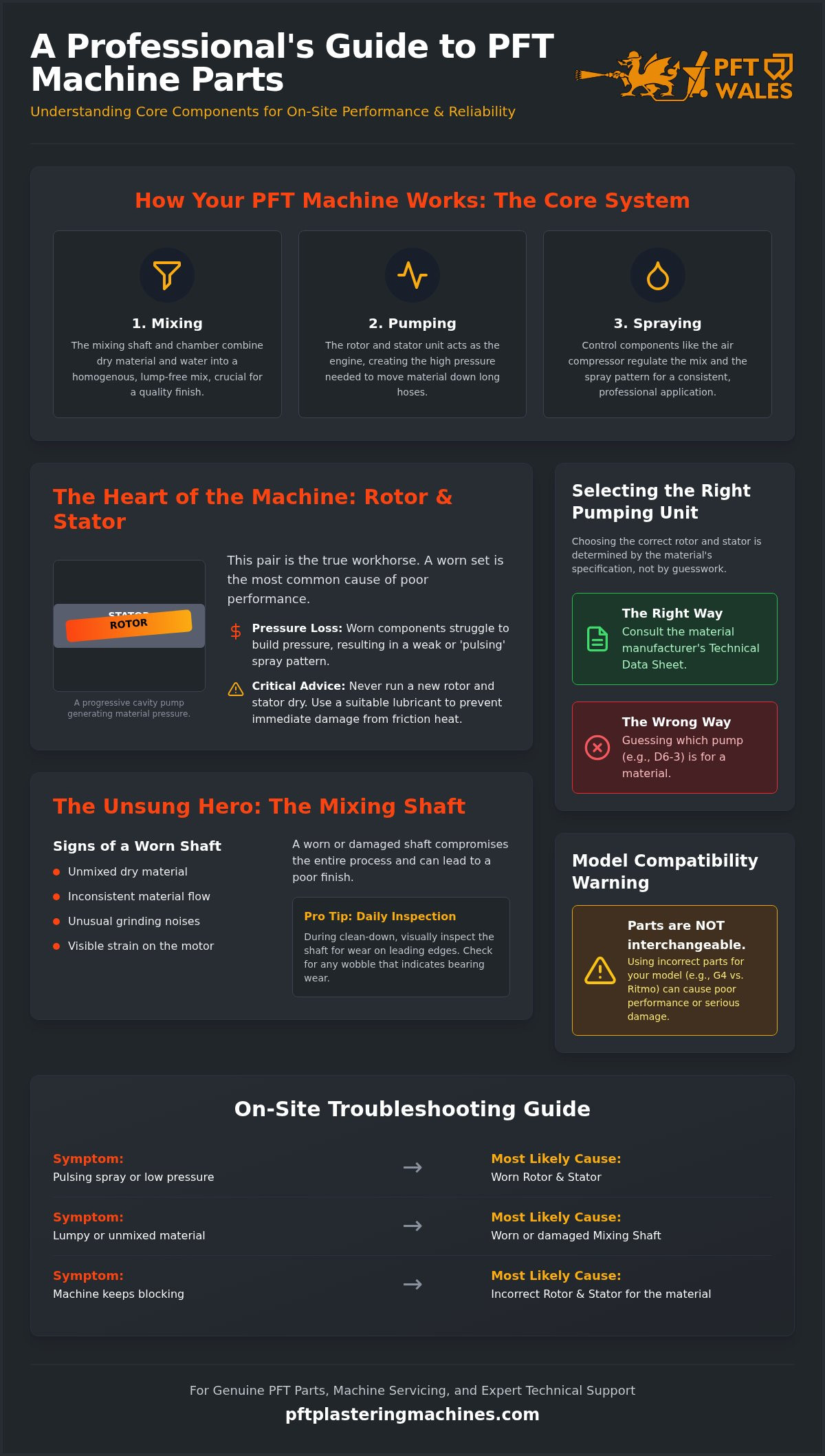
At its heart, the system has three main functions: mixing, pumping, and spraying.
- The mixing shaft and chamber are where dry material and water combine. The design of the shaft is critical for achieving a lump-free, homogenous mix every time.
- The pumping unit (rotor and stator) is the engine room of your machine. This powerful combination creates the pressure needed to move material down long hose lengths.
- Control components, including the water pump, flow meter, and air compressor, regulate the mix and the spray pattern, giving you control over the final application.
Understanding how these systems interact is the first step towards effective on-site maintenance and troubleshooting. A problem in one area, like a worn seal, can have a knock-on effect, causing pressure loss or motor strain elsewhere.
The PFT G4 vs. Ritmo: Part Compatibility
A common question we hear is whether parts are interchangeable between different PFT models, particularly the popular G4 and Ritmo machines. Whilst some consumable items and fittings might seem similar, it is crucial to treat each machine as a specific system. Major mechanical and electrical components are often designed for a particular model's power, output, and physical dimensions.
- Model-Specific Parts: Core components like mixing shafts, rotors, stators, and mixing tubes are often model-specific. Using an incorrect part can lead to poor performance, accelerated wear, or even serious damage to the machine.
- Electrical Components: Power cables, switches, and connectors are designed for specific voltages (e.g., 110v or 240v/400v). Always use the correct cable and plug configuration for your machine and the site's power supply to ensure safety and prevent electrical damage.
- Check Your Manual: The manufacturer's operating manual is the definitive source for correct part numbers. If you are ever in doubt about which part you need for your specific model and year, it is always best to seek expert advice.
The Role of the Mixing Shaft in Material Quality
The mixing shaft is arguably one of the most important PFT machine parts for achieving a high-quality finish. It's not just a simple stirrer; its helical design is engineered to thoroughly combine water and dry material, ensuring a consistent, workable mix from the first bag to the last. A worn or damaged shaft can compromise this process significantly.
- Signs of a Worn Shaft: If you notice unmixed dry material in your mix, inconsistent flow, or hear unusual noises from the mixing chamber, your shaft may be bent or worn. This can put a huge strain on the main motor.
- Impact on Material: The geometry of the mixing shaft is designed to handle different material types. A compromised shaft will struggle to achieve the homogeneity required for modern renders and plasters, leading to a poor finish.
- Routine Inspection: During daily clean-down, visually inspect the shaft for signs of wear, especially on the leading edges. Check for any wobble or movement that might indicate bearing wear. A clean, well-maintained mixing zone is key to your machine's longevity.
Rotors and Stators: Selecting the Right Set for Your Material
The rotor and stator are the true workhorses of your PFT machine. Working together as a progressive cavity pump, they generate the high pressure required to push dense materials like plaster and render through metres of hose. The rotor is the hardened steel screw that turns, whilst the stator is the heavy-duty, rubber-lined chamber it turns inside.
The fit between these two parts is precise. As the rotor turns, it forms a series of sealed cavities that progress along the stator, pushing the material forward. This mechanism is what determines your machine's flow rate and pumping pressure.
- The "Engine" of Your Machine: Think of the rotor and stator as the engine. The condition of this pair directly impacts performance. A worn set will struggle to build pressure, resulting in reduced output and a "pulsing" or "surging" spray pattern.
- Correct Fitment is Key: When fitting a new stator, it is essential to use a suitable lubricant. Attempting to run a new rotor and stator dry, even for a few seconds, can cause irreversible damage to the stator's rubber lining due to friction heat.
- Matching to the Material: Different materials have different aggregate sizes and consistencies. Choosing a pumping unit that is compatible with the material specified by the manufacturer is vital for avoiding blockages and ensuring efficient operation.
Understanding Different Pumping Units
PFT offers a range of rotors and stators, often identified by codes like "D6-3" or "D7-2.5". These codes relate to the geometry and output of the pump set. It is a common misconception that a specific pump is for a specific material. In reality, the choice is determined by the maximum particle size the pump can handle and the flow rate required.
The most reliable way to select the correct rotor and stator is to consult the technical data sheet provided by the manufacturer of the plaster or render you are using. This document will specify the machine and pump setup required for their product.
- D-Series Pumps: This is a common series of pumps used across the PFT range. For example, the D6-3 is a widely used, versatile pumping unit. However, its suitability for a specific product depends entirely on the material manufacturer's recommendations.
- "Maintenance-Free" vs. Adjustable Stators: Some stators are "maintenance-free" with a fixed rubber lining. Others are adjustable, featuring an outer sleeve that can be tightened to compensate for wear and maintain pumping pressure.
If you are unsure which rotor and stator set is required for a new material, or if you're experiencing pumping issues, our technical team can provide expert advice. As an authorised PFT supplier, we can help you match the right parts to your machine and application.
When to Replace Your Pumping Unit
A rotor and stator set is a wearing part; it will not last forever. Recognising the signs of wear is key to avoiding unexpected downtime on site. Waiting for a complete failure is a false economy that can cost you a full day's productivity.
- Pressure Drop: The most obvious sign of a worn rotor and stator is a noticeable drop in pumping pressure. If you have to turn the machine's speed up higher than usual to achieve the same flow, your pump is likely losing its efficiency.
- Visual Inspection: When cleaning your machine, take a moment to inspect the components. Look for scoring or visible wear on the rotor's surface. Check the inside of the stator for thinning, torn, or perished rubber.
- The Pumping Pressure Test: A pressure testing gauge can be attached to the machine's material outlet to measure the maximum pressure the pump can generate. This is a definitive way to assess the health of your rotor and stator. A healthy pump will quickly reach and hold the expected pressure, whilst a worn one will struggle.
Essential Small Parts: Seals, Couplings, and Filters
Whilst major components like rotors and stators get the most attention, it's often the failure of a small, inexpensive part that brings a project to a halt. Overlooking the maintenance of seals, couplings, and filters is one of the most common causes of site breakdowns. These small but essential PFT machine parts are the silent heroes that keep the entire system running efficiently.
Keeping a "breakdown box" with a small stock of these critical spares is one of the smartest investments a professional can make. A £5 seal can be the difference between a minor 10-minute fix and hours of lost time.
- Airtight and Watertight: The entire system relies on maintaining pressure. Worn hose seals or loose Geka couplings introduce air or allow water to leak, which can disrupt material flow and cause surging at the spray gun.
- Filtration is Protection: Water and air inlet filters are your machine's first line of defence against debris. Contaminants can damage sensitive and expensive components like solenoid valves, flow meters, and air compressors.
- Cleanliness is Efficiency: Daily cleaning is non-negotiable. Using the right tools, like cleaning shafts and sponge balls, prevents the build-up of hardened material that can cause blockages and put immense strain on the motor.
The Importance of Geka Seals and Hose Couplings
Material and air hoses are connected using robust couplings, but the seals inside them are what ensure a pressure-tight connection. These small rubber or plastic rings are consumable parts that degrade over time.
- Diagnosing Worn Seals: If you notice material or water weeping from a connection point, the seal has failed. A hissing sound from an air hose coupling indicates a leak that will reduce the compressor's efficiency and affect your spray pattern.
- Mortar vs. Air Couplings: It's important to use the correct type of coupling for each hose. Mortar hose couplings are designed to be heavy-duty and abrasion-resistant to handle the flow of material under high pressure. They are not interchangeable with the lighter-duty couplings used for air lines.
- Pre-emptive Checks: Before starting work, give each coupling a quick visual check. Ensure they lock together securely and that the seal is present and in good condition. A coupling that feels loose or shows visible signs of wear should be replaced before it fails under pressure.
Water and Air Filtration Systems
Your PFT machine relies on a clean, consistent supply of both water and air. The filters in these systems are vital for protecting the machine's internal mechanics.
- Inline Water Filter: This filter, usually located where the water hose connects to the machine, stops grit and debris from the site supply from entering the system. A blocked filter can starve the machine of water, leading to an incorrect mix and potentially damaging the water pump. It should be checked and cleaned daily.
- Air Compressor Filters: The air compressor also has filters to protect its internal mechanism from dust. A clean air supply is essential for achieving a fine, controllable spray pattern at the gun.
- PFT Service Kits: To simplify maintenance, PFT service kits are available that contain all the essential small spares you need for routine servicing. PFT Wales stocks a comprehensive range of these kits, making it easy to keep your breakdown box topped up.
Troubleshooting: Diagnosing Part Failure on Site
When a machine stops working on site, the pressure is on to find the fault quickly. A logical approach to troubleshooting can save you time and money. Start by observing the symptoms and then work systematically through the potential causes, from the simplest to the most complex.
Here are some common symptoms and a structured way to investigate them:
-
Symptom: Material mix is too dry or too wet.
Potential Checks: Is the water supply turned on and providing adequate pressure? Is the inline water filter blocked? Is the flow meter displaying a reading? Check for blockages or kinks in the water hose. -
Symptom: The machine is running, but no material is coming out.
Potential Checks: Is there a blockage in the hopper, mixing tube, or material hose? Has the rotor and stator failed and is no longer creating pressure? Check for "caking" of dry material on the mixing shaft. -
Symptom: The motor is overheating or tripping the power supply.
Potential Checks: Is there a blockage creating excessive pressure? Are you using an extension cable that is too long or not heavy-duty enough? Is the rotor and stator old and tight, putting a strain on the motor? -
Symptom: The spray pattern is spluttering or inconsistent.
Potential Checks: Is there an air leak at one of the hose couplings? Is the spray nozzle worn or partially blocked? Is the air compressor supplying consistent pressure? Is the material mix inconsistent?
Diagnosing Blockages and Pressure Loss
Blockages and pressure loss are two of the most frequent issues faced on site. They are almost always caused by a build-up of material or a worn component.
- Check the Mixing Zone: The first place to look for a blockage is the mixing shaft and the outlet of the mixing tube. Hardened material can build up here, restricting flow before it even reaches the pump.
- Test the Pumping Unit: A significant loss of pressure almost always points towards the rotor and stator. If the material is flowing to the pump but not leaving it with any force, the set is likely worn beyond its service life.
- Inspect the Mortar Hose: Run your hands carefully along the length of the material hose (with the machine off). Feel for any "soft spots" or bulges that could indicate internal wear or a partial blockage waiting to happen.
Electrical and Control Issues
Electrical faults require a cautious approach and should often be referred to a qualified technician. However, some basic checks can be performed safely.
- Power Supply: Always check the power source first. Has a breaker tripped? Is the plug securely connected? Inspect the full length of the power cable for any visible damage or cuts.
- Component Wear: Parts like carbon brushes in motors and compressors are designed to wear over time and will eventually need replacing as part of routine servicing.
- When to Call an Expert: If you suspect a fault with the main motor, control panel, or pressure switch, it is best not to attempt a repair yourself. PFT Wales offers a professional PFT Machine Servicing and Repairs service with experienced technicians who can diagnose and fix complex electrical and mechanical issues safely.
Sourcing Genuine PFT Spares and Professional Support
When a part on your PFT machine needs replacing, you have a choice: use a genuine PFT-manufactured part or opt for a cheaper, non-genuine "pattern" part. Whilst the initial saving on a pattern part might seem attractive, it's a decision that can have significant long-term consequences for your machine's performance, reliability, and value.
As an authorised PFT supplier, PFT Wales has built its reputation on supplying only genuine PFT machine parts. Our hands-on experience in the trade, dating back decades, has shown us time and again that quality components are the foundation of a reliable plastering and rendering operation.
- The Risk of Pattern Parts: Non-genuine parts are often made with inferior materials and to less precise tolerances. This can lead to premature failure, poor performance, and even cause damage to other components in your machine.
- More Than Just Parts: When you buy from a specialist like PFT Wales, you're not just getting a part in a box. You're getting access to expert technical support, professional training, and a full range of servicing options.
- Complete Your Kit: We also stock a huge range of professional tools from leading brands like Skimflex and Refina, allowing you to source everything you need to complete your work to the highest standard from one trusted supplier; for those branching out into commercial interiors, you can also explore Sale of glass office partition kits to provide high-end finishes.
Why Genuine PFT Parts Save Money Long-Term
Investing in genuine spares is an investment in your business's uptime and profitability. The slightly higher initial cost is easily offset by longer service life, superior performance, and peace of mind.
- Durability and Performance: A genuine PFT stator, for example, is manufactured from a high-quality rubber compound designed to withstand the specific abrasive materials it will pump. Cheaper imitations often use inferior compounds that wear out much faster, forcing you to replace them more frequently.
- Protecting Resale Value: A machine with a documented service history using genuine parts will always command a higher resale value than one that has been maintained with pattern parts.
- Manufacturer's Warranty: Using non-genuine components in your machine during its warranty period may invalidate the manufacturer's cover. Sticking to genuine parts ensures your investment remains protected.
Expert Servicing and Technical Training
At PFT Wales, our goal is to be a partner to your business, not just a supplier. We understand the pressures of the trade and provide the support you need to keep your equipment in peak condition.
- Technical Wisdom: Our team has years of practical, on-the-tools experience. When you call us for advice, you're speaking to someone who understands the problem you're facing and can provide a practical solution.
- Professional Training: We offer professional machine training for you and your crew at our dedicated facility. Proper training ensures your team can operate the machine safely, efficiently, and perform essential daily maintenance; for broader industrial safety and environmental compliance, AFN Industrial Services Ltd provides expert consultancy services.
- Get in Touch: Whether you need to identify the right part, book a service, or simply ask for some technical advice, our team is here to help.
Frequently Asked Questions (FAQs)
How often should I replace the rotor and stator on my PFT G4?
There is no fixed lifespan. It depends entirely on the type of materials you are pumping (abrasive renders wear them faster than soft plasters), the number of hours the machine is used, and how well it is cleaned. The key is to monitor performance and replace it when you notice a significant drop in pressure.
Can I use Ritmo parts on a PFT G4 machine?
While some minor fittings or screws might be interchangeable, major components like mixing shafts, motors, and pumping units are generally model-specific. Using the wrong part can cause damage. Always verify the correct part number for your machine model before ordering. If in doubt, contact us for confirmation.
What are the signs that my mixing shaft needs replacing?
Key signs include a poor or lumpy material mix, visible wear or bending of the shaft's paddles, and unusual rattling or grinding noises from the mixing chamber. A worn shaft puts a strain on the motor and should be replaced promptly.
Why is my PFT machine losing pressure at the spray gun?
Pressure loss is most commonly caused by a worn rotor and stator. However, it can also be due to an air leak at a hose coupling, a blockage in the material hose, or an inconsistent material mix. A systematic check of these areas is needed to diagnose the fault.
Is it worth buying a PFT service kit for my machine?
Absolutely. A service kit contains all the essential small, wearable parts like seals, filters, and couplings. Having one on the van means you can fix the most common causes of breakdowns in minutes, saving you hours of potential downtime.
What is the difference between a D6-3 and a D7-2.5 stator?
These codes refer to different pump geometries and sizes, which result in different flow rates and pressure capabilities. They are not interchangeable. The correct choice depends on your machine and the material you are using. Always refer to the material manufacturer's data sheet for their recommendation or contact our technical team for advice.
How do I clean my PFT machine parts properly to prevent wear?
Thorough cleaning at the end of every day is the single most important maintenance task. Use a cleaning shaft to clear the mixing tube and pump, and flush the material hose with clean water using sponge balls until the water runs clear. Never leave material to harden inside the machine.
Where can I find a schematic to identify a specific PFT part number?
Your machine's operating manual contains detailed schematics with part numbers. If you have lost your manual or are still unsure, as an authorised PFT dealer, PFT Wales has access to all the necessary diagrams and can help you identify the exact part you need.