

Buying a used plastering machine isn't just a budget-friendly compromise; it's often the smartest way to scale your rendering business in a tightening 2026 market. You've likely seen the horror stories on trade forums: "bargain" machines that arrive with a burnt-out motor or older PFT models that no longer have compatible parts. It's a genuine worry when you're looking to invest thousands of pounds of your hard-earned cash. We understand that hesitation because we've seen it all before.
This guide will show you how to navigate the second-hand market like a pro, ensuring you get a fully serviced, reliable machine that pays for itself on the first few jobs. You'll discover how to safely source, inspect, and maintain a used plastering machine to boost your on-site productivity without the new-build price tag. We'll walk you through the essential mechanical checks, the reality of total cost of ownership, and why securing expert technical support is the only way to protect your investment. By the end, you'll know exactly how to spot a workhorse from a money pit.
Key Takeaways
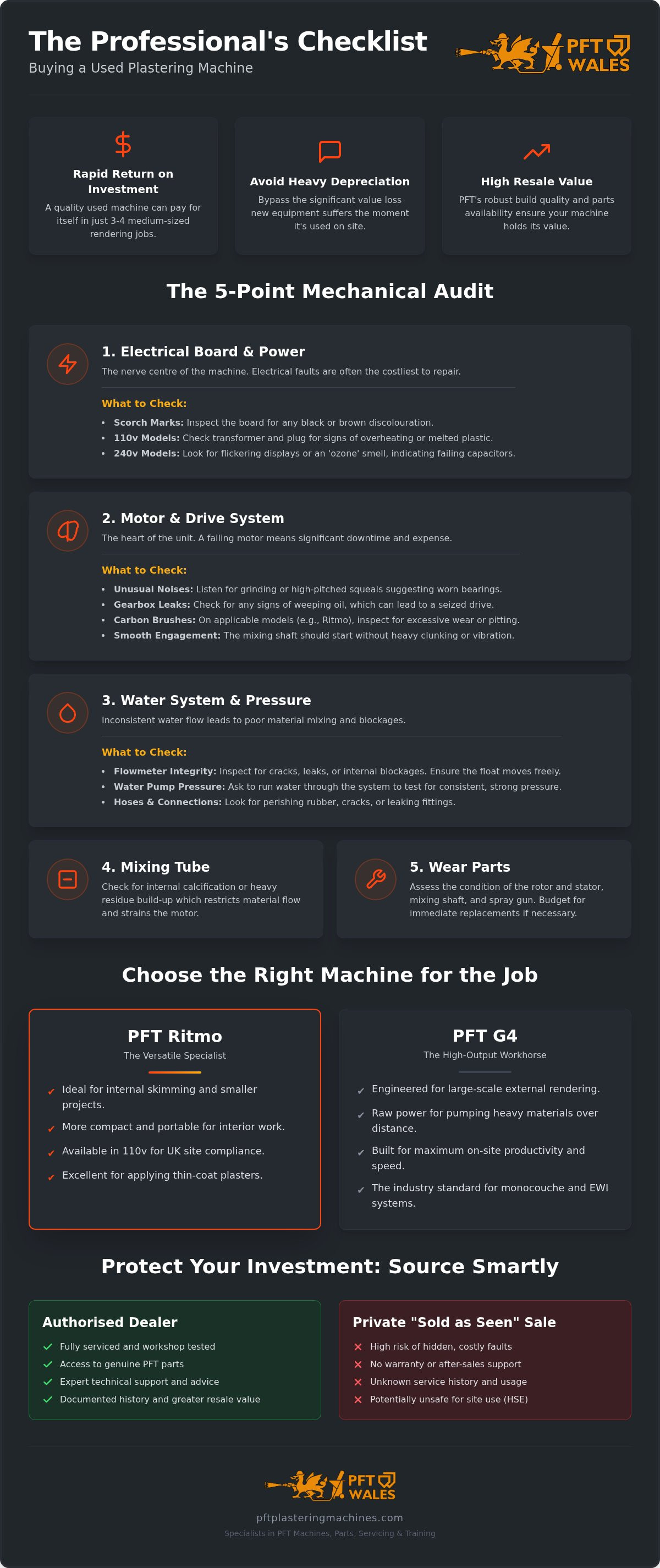
- Learn how to calculate the true ROI of a second-hand unit to scale your business whilst avoiding the heavy depreciation of new machinery.
- Master the 5-point mechanical audit to ensure your used plastering machine has a healthy motor and electrical board before you hand over any cash.
- Compare the versatility of the PFT Ritmo for internal skimming against the raw power of the PFT G4 for large-scale external rendering.
- Discover why finishing tools like Skimflex spatulas are essential for achieving a professional flat finish after the machine has done the heavy lifting.
- Understand the technical advantages of choosing a fully serviced unit from an authorised dealer over the risks of a "sold as seen" private sale.
The Case for Investing in a Used Plastering Machine
Plastering has evolved significantly from the manual techniques that define the history of plasterwork. In the current climate, the shift to machine application is a vital step for any firm looking to stay competitive. Investing in a used plastering machine is a tactical decision that allows you to increase your square footage per day without the daunting price tag of a factory-fresh unit. While a new machine loses a chunk of its value the second it gets dusty on site, a second-hand PFT unit has already moved past that initial depreciation curve. Your money stays in your pocket or goes toward better materials and finishing tools. There's also the hidden value of buying through the right channels. A machine with an authorised dealer history isn't just a piece of metal; it's a documented record of care that makes it far easier to maintain and eventually resell.
Cost Savings vs Operational Risk
The return on investment for a used unit is remarkably fast. In many cases, the machine pays for itself after just three or four medium-sized monocouche rendering jobs. You're essentially buying time and reducing physical strain on your team. The maths is simple. You can apply basecoats at three times the speed of a hand-applied crew. However, don't mistake a lower purchase price for zero maintenance. We suggest always budgeting for an initial professional service. With labour rates typically around £72 per hour plus parts, a proper workshop check-over is a small price to pay to avoid a breakdown mid-pour. It's about being pragmatic; buy the machine at a discount, but spend a little of those savings to ensure it's site-ready. For those needing to manage unexpected costs or bridge a small gap in their budget, Pixie Loans offers guidance on accessing quick, short-term finance.
There's a reason you see so many PFT machines still working hard after ten or fifteen years. The build quality of the G4 and Ritmo chassis is second to none, designed specifically to withstand the damp and grit of UK sites. This ruggedness makes them the gold standard for the used market. Unlike budget brands that become scrap when a single component fails, PFT’s modular nature means you can easily source genuine PFT machine parts to keep an older model running like new. This parts availability, combined with the brand's reputation, ensures that your machine will retain a high resale value. Should you ever decide to trade up, there's always a queue of tradespeople looking for a reliable, serviced PFT workhorse.
Critical Inspection Points for a Used Plastering Machine
Buying a used plastering machine requires a sharp eye and a healthy dose of scepticism. You aren't just buying a frame; you're buying an integrated system of electrical, mechanical, and hydraulic components. Don't be seduced by a fresh coat of paint or a clean hopper. Before you commit, perform a rigorous 5-point audit: inspect the electrical board for scorch marks, listen to the motor for bearing whine, test the water pump's pressure, check the mixing tube for calcification, and assess the state of the wear parts. Adhering to HSE guidance on refurbished machinery is vital for ensuring any second-hand kit meets safety standards before it hits the site. If a seller is hesitant to let you run water through the system, walk away.
Electrical health varies significantly between 110v and 240v models. On 110v units, check the transformer and the plug for signs of overheating or melted plastic. For 240v machines, look closely at the inverter and circuit boards; any flickering on the digital display or a faint smell of ozone usually indicates a failing capacitor. These components are expensive to replace, so identifying these issues early is essential for your bottom line. If you're unsure about a specific machine's history, you can always speak to our technical team for a second opinion.
The Motor and Drive System
The motor is the heart of the unit. Start the machine and listen for irregular grinding or high-pitched squeals that suggest the bearings are on their way out. Check the gearbox for any weeping oil; a slow leak today is a seized drive tomorrow. To check the brushes on a PFT Ritmo motor, simply unscrew the black plastic caps on the motor housing and inspect the carbon for excessive wear or pitting. A healthy drive system should engage smoothly without excessive vibration or "clunking" when the mixing shaft starts to turn.
Water System and Pressure Integrity
Consistent material mix depends entirely on water pressure. Inspect the flowmeter for cracks or internal blockages; if the float is stuck, you'll never get your slump right. Check the water pump for internal calcification, especially if the machine has been used in hard-water areas. Perished plastering machine hoses and worn couplings will lead to pressure drops and messy leaks. Finally, pull the rotors and stators to check for internal scoring. Whilst these are consumables, their condition tells you exactly how much life is left in the machine before its next service interval.
Choosing the Right Used Model: PFT Ritmo vs PFT G4
Picking the right used plastering machine isn't just about the price; it's about matching the tool to your daily grind. If you're mostly doing domestic extensions or internal refurbishments, a massive 3-phase unit is going to be a logistical nightmare. Conversely, trying to render a whole housing estate with a small internal machine will burn the motor out before the first week is done. You need to consider power availability, van space, and exactly what materials you'll be pumping before you sign on the dotted line. For residential work in the UK, 110v or 230v models are the standard; industrial sites often demand 3-phase (400v) power for high-output rendering.
Portability is a huge factor for the independent contractor. A Ritmo L is compact enough to fit into a standard UK van like a VW Caddy or a Transit Connect. If you're looking at a G4, you'll likely need a larger Transporter-sized van or a dedicated trailer. For larger operations where moving such heavy equipment becomes a logistical challenge, check out Nortruck Forklifts for professional lifting and advisory services. Don't forget that a larger machine also means more hoses, cables, and cleaning gear to lug around. Always measure your load space before committing to a purchase.
The Ritmo series, particularly the Ritmo L, is the go-to for thin-coat systems and internal skimming. Solo operators love these machines because they're easy to dismantle, clean, and maintain without a second pair of hands. If you're buying a second-hand Ritmo L, check if it's the Smart or the Plus model. The Smart is often preferred for its simplicity in residential settings. These machines are perfect for pumping bagged materials, but they require a steady hand and a good understanding of consistency. If you're new to the system, we highly recommend checking out the PFT Wales training and help videos to get up to speed with the setup and cleaning routines that keep these machines running smoothly.
Used PFT G4: The Heavyweight Workhorse
The PFT G4 remains the king of large-scale rendering and floor screeds. It's a beast of a machine that can handle everything from monocouche to fire protection sprays. However, buying a used G4 requires a bit more technical due diligence. Because these machines can last decades, you must check the age of the unit; older models may have slightly different configurations. Access to machine schematics is vital for any future repairs. Remember that a G4 is a high-draw machine. If you're working on a site without a robust 3-phase supply, you'll need to factor in the cost of a dedicated generator to provide the necessary power. It's a serious investment for serious output.
Essential Finishing Tools for Machine Plastering
A used plastering machine is a beast for on-site productivity, but it only handles half of the equation. The machine gets the material onto the substrate at high speed, but the quality of the final finish depends entirely on your hand tools. If you spray a wall and try to flatten it with a worn-out, notched trowel, you're fighting a losing battle. The sheer volume of material a PFT unit can pump means you need finishing tools that can keep pace. This is why the plastering spatula has become the industry standard for machine-applied renders and plasters. Unlike a traditional trowel, a spatula allows you to flatten large areas with minimal pressure, ensuring a flawlessly flat finish in a fraction of the time.
Selecting the correct size is a tactical decision. A 10" spatula is perfect for reveals and tight corners, whilst a 40" version is the only way to tackle large-scale commercial walls or ceilings without leaving "tram lines." You also need to match the blade to the compound. Ultra-flex stainless steel blades are the gold standard for internal skimming and thin-coat systems, providing just enough give to follow the contours of the wall. For the initial flattening of heavier basecoats or monocouche renders, a more rigid blade is often required to move the material effectively.
The Skimflex and Refina Spatula Range
In the UK trade, names like Skimflex and Refina are synonymous with durability. These ranges offer ergonomic grips that significantly reduce wrist and shoulder fatigue. When you're working alongside a high-speed machine, you're moving a lot of material quickly; light, well-balanced tools are a necessity for your long-term health. Extension poles are another game-changer. They allow you to finish high walls and ceilings from the safety of the floor, speeding up the process and reducing the need for constant scaffolding adjustments. The Skimflex 40" spatula is a standout product for rapid coverage, often turning what used to be a two-man finishing job into a solo operation.
Buying the Right Finishing Kit
When you invest in a second-hand machine, don't make the mistake of using old, damaged tools. A fresh set of professional plastering spatulas is the best way to ensure your machine-applied finish is perfect from day one. It's about protecting your reputation. Even a tiny nick in a 32" blade will show up on every pass, leading to unnecessary sanding and touch-ups. If you're building a kit for a specific project or need advice on tool compatibility, contact us for advice on the best tool combinations for your specific machine and material setup.
The Benefits of Buying Refurbished from PFT Wales
Buying a used plastering machine from a private seller is often a roll of the dice. You might find a bargain, or you might end up with a unit that has been neglected for years. At PFT Wales, we bridge that gap by offering refurbished machinery that has been through a rigorous mechanical audit. The difference between "sold as seen" and "serviced by an authorised dealer" is your peace of mind. We don't just hand over the keys; we provide the expert technical advice and machine schematics you need to keep that investment running for the long haul. Whether you're based in London or the Scottish Highlands, our national delivery and support network ensures you aren't left stranded if a technical question arises.
Professional Servicing and Workshop Support
Our workshop is the backbone of our operation. With 16 years of hands-on experience as an authorised PFT dealer, our technicians understand the nuances of every G4 and Ritmo model. We offer a "service-while-you-wait" appointment system because we know that every hour your machine is off-site is an hour of lost profit. If a rare component is required, we source urgent parts directly from Germany via FedEx to ensure minimal downtime. This level of support is simply unavailable on the private market. When you buy from us, you're buying a machine that is site-ready and backed by a team that knows exactly how to fix it.
Finance and Part-Exchange Options
Managing cash flow is a constant challenge for UK tradespeople. To help you scale your business without a massive upfront hit, we provide flexible "Pay in 12 months" checkout options. This allows the machine to start paying for itself through increased productivity before the final balance is even due. If you're looking to upgrade, our part-exchange programme is an excellent way to trade in your old gear for a newer, more efficient PFT model. It's a straightforward, professional way to keep your kit current. If you're unsure which unit fits your current workload, you can contact PFT Wales for technical advice on used machinery. We'll help you navigate the options to find a workhorse that matches your specific trade requirements.
Secure Your Next Site Workhorse
Scaling your rendering business in 2026 doesn't require a massive upfront investment in brand-new gear. A high-quality used plastering machine can deliver the same on-site speed and reliability, provided you prioritise a documented service history and a rigorous mechanical audit. By choosing a refurbished PFT unit over a risky private sale, you're investing in a machine that's been vetted by experts and is ready to work from day one. It's about working smarter, not harder.
Success depends on the details. Pairing your unit with genuine Skimflex or Refina finishing tools ensures your work meets the highest professional standards whilst reducing fatigue. With 16 years of experience as an authorised PFT dealer, our team supports you with expert workshop servicing at £72 per hour and a full stock of genuine spares. Don't leave your next big contract to chance with unverified equipment. We're here to help you make a move that makes sense for your bottom line.
Ready to get started? Upgrade your finishing kit with our professional plastering spatulas and contact us today to discuss our current stock of refurbished machines and expert technical support. Let's get your business moving faster.
Frequently Asked Questions
Is it worth buying a used plastering machine instead of a new one?
Buying a used plastering machine is a cost-effective way to scale your operations without the heavy depreciation of new equipment. For many UK contractors, a well-maintained second-hand unit offers a much faster return on investment, often paying for itself within just a few medium-sized jobs. Whilst new machines offer the latest tech, a serviced PFT unit provides the same on-site reliability and productivity boost for a fraction of the initial capital outlay.
What is the most common fault to look for in a second-hand PFT machine?
Electrical component failure and motor wear are the most frequent issues found in neglected machines. You should check the circuit boards for scorch marks and listen for grinding noises from the motor bearings. Water system calcification is another common problem; if the machine wasn't flushed properly after use, hardened material or limescale can block the flowmeter. Identifying these faults early prevents expensive downtime and ensures your used plastering machine remains site-ready.
Can I get a warranty on a used plastering machine?
Only new PFT machines carry a 1-year manufacturer warranty. Second-hand units are generally sold without a warranty, which makes the source of your purchase critical. Buying from a private seller is a "sold as seen" risk, whereas purchasing a refurbished unit from an authorised dealer ensures the machine has been professionally inspected. We provide fully serviced machines that have been through our workshop to minimise the risk of immediate mechanical failure.
Which PFT model is best for a first-time machine buyer?
The PFT Ritmo L is usually the best entry point for those new to machine application. It's compact, fits into a small van, and is significantly easier to dismantle and clean than larger units. Because it runs on standard residential power supplies, it's perfect for domestic extensions and internal skimming. Its straightforward design allows first-time owners to master the mixing and pumping process before moving on to larger industrial-scale machinery.
Do I need special training to operate a used PFT Ritmo?
While the machines are designed for efficiency, professional training is essential for safe and effective operation. Operating a PFT Ritmo involves managing water pressure, material consistency, and air flow simultaneously. We offer professional machine training to help you avoid common mistakes like blockages or incorrect mixing. Mastering these skills ensures you get a perfect finish every time and significantly extends the lifespan of your machine's rotors and stators.
How often should a used rendering machine be serviced?
We recommend a professional service at least once a year or more frequently if the machine is used daily on large-scale projects. Our workshop labour rate is £72 per hour, and a typical service takes between one and two hours plus the cost of any parts. Regular maintenance prevents small issues from becoming catastrophic failures. Keeping the water system clear and the gearbox oiled is the best way to protect your investment.
Are spare parts for older PFT machines still available in the UK?
Yes, spare parts for most older PFT models are still widely available in the UK. One of the biggest advantages of the PFT brand is its modular design and long-term commitment to parts support. We keep a comprehensive stock of genuine spares and accessories in our workshop. If a specific component for an older model isn't on the shelf, we can express-order urgent parts directly from Germany via FedEx to get you back to work.
What electrical supply do I need for a used PFT G4?
Most PFT G4 models require a 3-phase (400v) electrical supply to handle high-output rendering and floor screeds. While some 230v variants exist, the standard heavyweight workhorse used on industrial sites needs a robust power source. If your site doesn't have 3-phase power available, you'll need to factor in the cost of a suitable generator. Always verify the voltage requirements on the machine's data plate before connecting it to a power supply.