

The most expensive plastering trowel in your van isn't necessarily the best one; the best one is the tool that feels like a natural extension of your arm from the very first pass. In a UK plastering market now valued at £2.8 billion, the pressure to deliver a mirror-like finish whilst meeting NHBC Standards 2026 has never been higher. You shouldn't have to spend days "breaking in" a new blade or fighting against a handle that leaves your wrist aching by lunchtime.
We understand the frustration of a cheap blade losing its shape or rust spots ruining a clean skim. You need gear that's ready to go out of the box. This guide will show you how to select the perfect plastering trowel for every application, from high-end skimming to heavy-duty rendering, ensuring maximum durability and a flawless finish. We'll explore the latest 2026 trends in ultra-flexible 0.3mm stainless steel and ergonomic designs to help you find an investment that truly lasts. Whether you're looking for Refina quality or our own trade-tested Skimflex range, getting the right tool in your hand is the first step toward a perfect wall.
Key Takeaways
- Choose between stainless steel for rust resistance or carbon steel for superior blade memory and high-performance flexibility.
- Select the right plastering trowel size and mounting type to reduce hand fatigue and ensure blade stability on large-scale skimming jobs.
- Understand the science of blade thickness, from ultra-flexible 0.3mm options for finishing to rigid blades for heavy-duty rendering.
- Learn the proper technique for breaking in a new tool to avoid scoring or "chatter" marks on your final finish.
- Discover why sourcing trade-tested equipment like the Skimflex range ensures your tools meet the latest NHBC finish requirements.
Finding the Right Plastering Trowel for Your Trade
In the modern UK construction sector, your plastering trowel is more than just a piece of metal on a handle. It's the difference between meeting the NHBC Standards 2026 for internal finishes and having to rework a whole room. Whilst there are many different types of trowels used across the building trades, a professional plasterer needs a tool that responds to the specific physical properties of modern materials. Using a generic DIY trowel often leads to failure. The blades are usually too rigid, the steel is prone to rusting, and they lack the "memory" required to flex and return to a perfectly flat state after every pass.
Even if you've invested in high-efficiency plastering machines to speed up the application process, the final finish still relies on your hand skills. A PFT G4 might get the material on the wall in record time, but the mirror finish that clients expect comes down to the quality of your finishing tool. Expert hand finishing remains the benchmark of a true tradesperson, even in a machine-led industry.
To better understand this concept, watch this helpful video:
Finishing Trowels vs Rendering Trowels
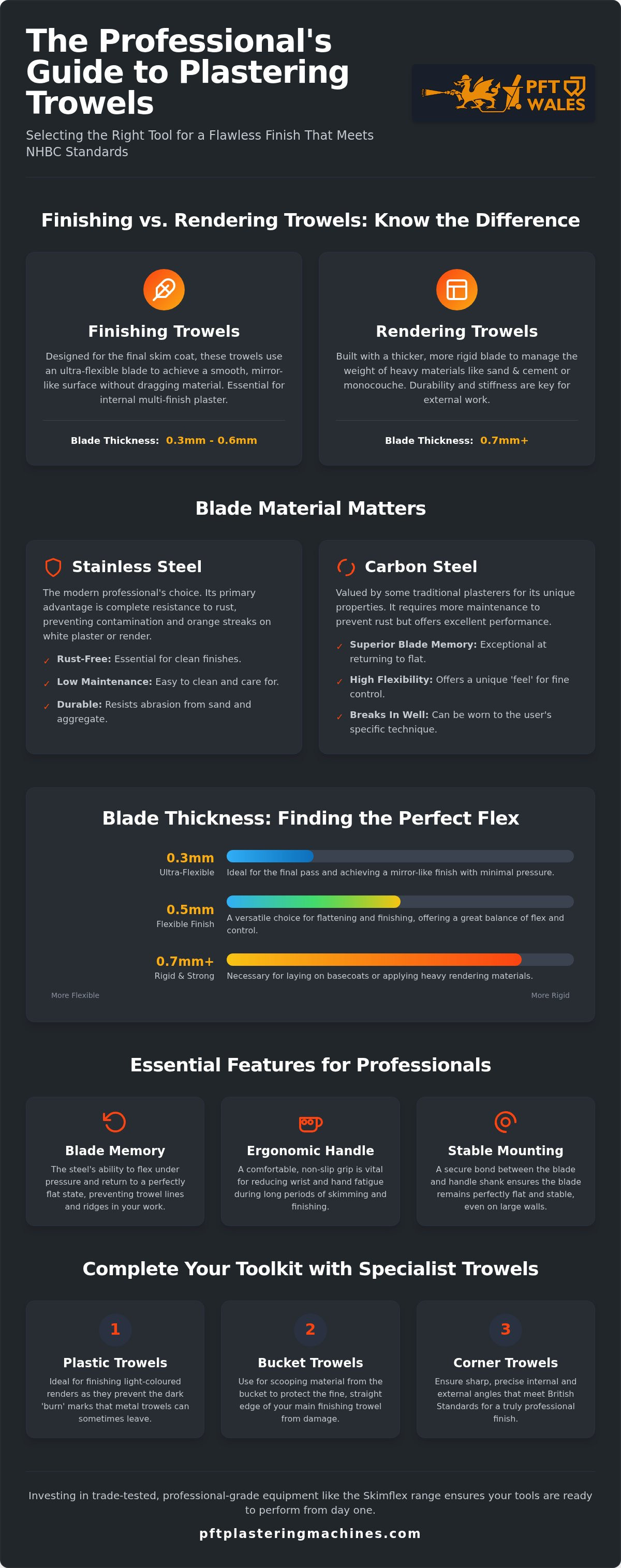
The main difference lies in blade rigidity and thickness. A finishing trowel, like those found in our Skimflex tools range, typically uses ultra-flexible stainless steel between 0.3mm and 0.6mm thick. This allows you to apply light pressure to flatten the skim without dragging the material. Rendering trowels need more backbone. When you're moving heavy sand and cement or monocouche, a thicker, more rigid blade is essential to manage the weight. For external work, rust resistance is a necessity to prevent orange streaks from ruining a fresh render coat.
Specialist Trowels for Modern Systems
Modern thin-coat systems and monocouche renders have changed the toolkit requirements. We've seen a significant rise in the use of plastic trowels for finishing light-coloured renders because they don't leave the dark "burn" marks that stainless steel can occasionally produce. Don't overlook the secondary tools that make the job possible. A proper bucket trowel saves your main finishing blade from damage when scooping, whilst specialist corner trowels ensure those internal angles meet British Standards. Sourcing these from a specialist like PFT Wales ensures you're using equipment tested on real UK sites.
Blade Materials and Flexibility: The Science of the Skim
Understanding the metallurgy of your plastering trowel is essential for achieving a consistent finish. It isn't just about how the tool looks in the van; it's about how the metal reacts under tension. The most critical factor here is "blade memory". This refers to the steel's ability to flex during a stroke and return to a perfectly flat state immediately afterwards. Without this memory, a blade becomes permanently bowed, leading to uneven application and unwanted ridges in your work.
Thickness also plays a vital role in the "feel" of the tool. A standard 0.7mm blade provides the rigidity needed for laying on or working with heavier basecoats. However, for the final stages of a multi-finish skim, many professionals now opt for 0.5mm or even ultra-flexible 0.3mm blades. These thinner blades allow for a lighter touch, reducing the physical effort required to achieve a mirror finish. If you're unsure which blade suits your specific material, get in touch with our technical team for expert advice.
Stainless Steel: The Low-Maintenance Professional Choice
Most modern tradespeople prefer stainless steel for its convenience and reliability. Rust-free properties are vital because even a tiny speck of oxidation can contaminate a white skim coat, leaving orange streaks that are impossible to hide. High-grade chrome stainless steel, like that used in Refina and Skimflex tools, offers excellent durability against the abrasive nature of plaster. Stainless steel is the industry standard for internal skimming in 2026 because it eliminates the risk of rust contamination whilst providing the perfect balance of flexibility and durability.
Spring Steel and Carbon Steel: The Traditionalist's Edge
Whilst stainless steel dominates the market, carbon steel and spring steel still have a loyal following amongst seasoned professionals. The primary advantage is the "bite". Carbon steel is slightly softer than stainless, meaning the blade actually sharpens itself as it wears against the plaster. This creates an incredibly sharp edge that some find superior for certain types of backing coats. However, the maintenance is higher. You don't want to leave a carbon steel blade wet in the bucket; it needs to be cleaned and dried thoroughly to prevent rust from spreading to your other gear. For those who value the traditional feel and are willing to put in the maintenance time, these blades offer a unique level of control.
Key Features to Evaluate Before You Buy
When you pick up a plastering trowel, the first thing you should check isn't the shine of the blade, but the quality of the mounting. The "tang"—the aluminium or magnesium alloy spine connecting the handle to the blade—determines the tool's overall stability. A weak or poorly riveted mounting will lead to blade wobble, which is fatal for a flat finish. In the UK, the 14-inch (355mm) trowel remains the industry standard for general skimming. It offers the best balance of coverage and control. However, seasoned pros often keep an 11-inch version for tight cupboards and a 16-inch blade for flattening large ceiling spans with fewer passes.
Weight is your biggest enemy over an eight-hour shift. Repeatedly dragging a heavy tool through wet plaster leads to chronic wrist and elbow strain. Professional ranges like Skimflex tools prioritise lightweight alloys in their mountings to reduce this daily fatigue without sacrificing the rigidity needed for a flat finish. You might also notice "pre-worn" or "broken-in" edges on premium models. Whilst these carry a higher price tag, they are worth every penny. They eliminate the need to spend hours manually filing or rubbing a new blade against a brick to bevel the edges, allowing you to go from the box to a mirror finish immediately.
Handle Ergonomics: Cork, Leather, or Soft-Grip?
Handle choice is often a matter of personal preference, but the ergonomics are backed by practical science. Cork handles are highly favoured for their moisture-wicking properties; they stay grippy even when your hands are wet or sweaty. Leather handles are the traditional luxury option. Over time, the leather absorbs oils and moisture, moulding itself to the unique shape of your grip for a truly custom feel. For those looking for maximum impact absorption, soft-grip handles use modern polymers to dampen vibrations, making them a reliable choice for long shifts on demanding commercial sites.
Blade Shape and Edge Design
The debate between square and rounded corners depends on your specific task. Square edges provide the precision required for working right into internal corners, but they are more likely to leave "tramlines" if your technique isn't perfect. Rounded corners are far more forgiving during the final trowel-up, as they significantly reduce the risk of the blade catching or digging in. Look for a tool with a slight factory-set bow. This ensures the centre of the blade makes contact first, which allows the edges to feather the plaster out smoothly for that flawless, professional result.
Maintenance and the 'Breaking-In' Process
A fresh-from-the-box plastering trowel is rarely ready for a final skim. Those sharp, factory-milled edges will "score" your work, leaving unsightly lines and "chatter" marks that ruin a mirror finish. Unless you've bought a pre-worn model from our Skimflex range, you'll need to spend time bevelling the blade. This process removes the burrs and rounds the edges just enough to let the tool glide over the plaster without catching.
If you need to break in a blade manually, follow these steps:
- Grab a fine-grit sharpening stone or a manual file.
- Run the stone along the long edges of the blade at a 45-degree angle.
- Gently work the corners to create a slight radius; this prevents the tool from digging in during the final trowel-up.
- Some professionals prefer to use a new tool on a few heavy rendering or backing-coat jobs first, letting the abrasive sand do the hard work of wearing down the edges.
Safety is paramount during this stage. Once a blade is broken in, it's essentially a giant razor. Always be mindful when reaching into your tool bag or cleaning the edges, as a slip can lead to a serious injury. Treat your edges with respect, both for your safety and the quality of your work.
Cleaning and Storage Best Practices
Don't let plaster set on your blade. It's a basic rule, but it's easy to forget at the end of a long Friday. Dried plaster leads to pitting and ruins the perfectly flat surface you need for skimming. Use a stiff bucket brush and plenty of clean water throughout the day to keep the metal clear. When you pack up, dry the blade thoroughly to prevent any chance of oxidation, even on stainless steel. In the van, protect those edges. A single nick from a stray screwdriver or a heavy spirit level can ruin an expensive tool. Use a blade guard or a dedicated tool roll to keep the metal pristine.
When to Replace Your Trowel
Tools don't last forever, even the best ones. Look for signs of "rounding"—this happens when the blade has worn down so much that it loses its effective surface area and tension. If you notice the mounting has become bent or the rivets are starting to wobble, your consistency is gone. It's time for a replacement. We always recommend keeping a backup trowel in the van; you don't want a damaged tool to stop a job halfway through a set. For technical advice on choosing your next professional tool, contact PFT Wales for expert support.
Why Sourcing from PFT Wales Makes Sense for Professionals
Choosing where to buy your next plastering trowel shouldn't be an afterthought. At PFT Wales, we've spent 16 years building a reputation as a specialist partner to the trade, not just a retail outlet. We understand that a PFT G4 or Ritmo machine is only half of the equation; the final finish depends on the quality of the hand tools that follow the spray. This synergy between high-performance machinery and professional-grade finishing tools is what sets our collection apart. We don't just sell equipment; we provide the technical support and industry knowledge gained from over a decade and a half of hands-on involvement with UK contractors.
Whether you're looking for genuine PFT parts or the latest Refina finishing gear, we ensure every product in our catalogue meets the standard required for modern site work. Our team operates from a dedicated workshop where we service and repair the very machines these tools are designed to complement. This gives us a unique perspective on tool durability and performance that generic builders' merchants simply cannot match.
The Skimflex Advantage: Professional Tools for UK Trades
We developed the Skimflex brand to offer a high-performance, trade-tested alternative to mainstream labels. These tools are professionally sourced from top European manufacturers in Poland, Austria, and Germany, ensuring they meet the highest metallurgical standards. Every item in the range is designed with the specific needs of UK plastering styles in mind, from the blade flexibility required for multi-finish to the ergonomic handle designs that reduce fatigue on long shifts. Explore our range of Skimflex tools for premium finishing that justifies the investment.
Expert Support and National Delivery
Buying from a specialist means you have access to expert advice whenever you need it. If you're unsure about blade thickness or mounting stability, you can get technical advice via telephone on 01792 677057. We back our product knowledge with a reliable national delivery structure designed for the working professional. Small items under 2kg start from £3.50, whilst all Skimflex items qualify for free Tracked 48 delivery. If you need your gear on-site tomorrow, next-working-day upgrades are available for £9.99. View our [plastering trowels collection](https://pftplasteringmachines.com/collections/plastering-trowels) to see the full range of professional equipment ready for immediate dispatch.
Equipping Your Van for a Flawless Finish
Investing in a high-quality plastering trowel isn't just about the immediate results on the wall; it's about protecting your long-term health and professional reputation. We've explored how blade memory and ergonomic handle designs reduce fatigue whilst ensuring you meet the strict NHBC Standards 2026. Remember that a tool is only as good as its maintenance. Keeping those edges clean and properly broken-in will prevent the scoring marks that lead to costly snagging lists.
As an authorised PFT and Refina supplier with 16 years of industry experience, we're here to help you make the right choice. Whether you're upgrading your kit or looking for the specific flexibility of our trade-tested Skimflex tools, we've got you covered. Don't forget that all Skimflex items come with free Royal Mail Tracked 48 delivery to keep your overheads down. This ensures your investment is both practical and cost-effective for your business.
Ready to find the perfect blade for your next project? Contact our technical team today for expert advice tailored to your trade. We look forward to helping you achieve that mirror-like finish on every job.
Frequently Asked Questions
What is the best plastering trowel for a mirror finish?
An ultra-flexible stainless steel blade with a thickness between 0.3mm and 0.5mm is the best choice for achieving a mirror finish. These thinner blades allow you to apply light pressure during the final trowel-up without leaving marks or dragging the material. Professional ranges like Skimflex or Refina provide the necessary memory to return to flat after every pass. This flexibility is essential for meeting the high standards required in modern UK internal plastering.
Do I need to break in a new Skimflex or Refina trowel?
It depends on the specific model you purchase, as many premium tools now come with pre-broken-in or bevelled edges. A pre-worn plastering trowel saves you hours of manual filing and allows you to start skimming immediately without the risk of scoring the plaster. If your new tool has sharp, square factory edges, you should gently rub them with a fine stone to prevent chatter marks on your first few jobs.
What size plastering trowel should a beginner use?
A 14-inch (355mm) trowel is the recommended starting point for most beginners in the UK trade. This size provides a perfect balance between coverage and physical control, making it easier to manage the weight of the plaster whilst learning the correct wrist action. As your confidence grows and your technique improves, you might add an 11-inch version for tight spaces or a 16-inch blade for larger ceiling spans with fewer passes.
Is a stainless steel trowel better than carbon steel?
Stainless steel is generally considered superior for modern internal work because it is rust-resistant and requires less daily maintenance. Carbon steel blades are favoured by some traditionalists for their bite and ability to sharpen themselves as they wear; however, they can easily ruin a clean skim with orange rust streaks if not dried perfectly. For most professionals, the durability and reliability of a high-grade stainless steel blade make it the more practical investment.
How do I prevent my plastering trowel from rusting?
The most effective way to prevent rust is to clean the blade thoroughly with a bucket brush and fresh water after every set. Never leave wet plaster to dry on the metal. After cleaning, dry the tool completely with a clean rag before storing it in your van. Whilst stainless steel is highly resistant, applying a light coat of tool oil to carbon steel blades provides an essential barrier against moisture and oxidation.
Can I use the same trowel for plastering and rendering?
You can use the same tool, but it isn't ideal for maintaining a professional standard. Rendering involves moving heavier, more abrasive materials like sand and cement, which requires a stiffer blade with more backbone. Using your fine finishing plastering trowel for heavy rendering will quickly wear down the edges and may permanently bow the metal. It's better to keep a dedicated, thicker blade for basecoats and a flexible one for topcoats.
Why is my new trowel leaving black marks on the plaster?
Black marks, often called burning, occur when the metal blade reacts with the plaster during the final stages of compression. This is usually caused by applying too much pressure or over-working the material as it sets. If you're working with light-coloured renders or sensitive finishes, switching to a plastic finishing trowel can eliminate this issue entirely. Ensuring your stainless steel blade is clean and free from old residue also helps reduce unwanted marking.
How long does delivery take for tools from PFT Wales?
Delivery typically takes between 24 and 48 hours depending on the service you choose. Skimflex tools are sent via free Royal Mail Tracked 48, whilst smaller items under 2kg start from £3.50 for the same timeframe. If you need your gear urgently, we offer a next-working-day upgrade for larger items at £9.99. Bulky or longer equipment is dispatched on a 48-hour service for £15.99 to ensure safe national delivery across the UK.