

What if the most overlooked tool in your kit is actually the one dictating the speed and cleanliness of your entire day? It's easy to view the humble bucket trowel as just a basic scoop, but any tradesperson who's dealt with a snapped weld or a handle that rubs their knuckles raw knows better. When you're working with abrasive renders or fast-setting plasters, your equipment needs to be an extension of your hand, not a source of frustration that leaves half your material wasted at the bottom of the tub.
We know you value gear that feels balanced, stays sharp, and survives the daily rigours of a busy site. Discover why the right bucket trowel is the foundation of a fast, clean, and professional plastering or rendering setup. We're going to break down the technical differences between stainless and carbon steel blades, explore ergonomic handle designs from brands like Skimflex and Refina, and show you how to ensure every mix transfer to your hawk is as efficient as possible. By the end of this guide, you'll know exactly which tools will keep your buckets clean and your workflow moving.
Key Takeaways
- Learn why the clipped-back corner of a professional bucket trowel is essential for scraping every bit of material from your tub and reducing waste.
- Understand the specific design differences between bucket and margin trowels to ensure you always reach for the right tool for the task.
- Discover why stainless steel remains the gold standard for durability and ease of cleaning when working with abrasive UK renders.
- See how the right trowel choice streamlines material transfer into machine hoppers, making your machine plastering setup more efficient.
- Explore the benefits of ergonomic handle technology from leading brands like Skimflex and Refina to reduce fatigue and knuckle rub on site.
Understanding the Bucket Trowel: More Than Just a Mixing Tool
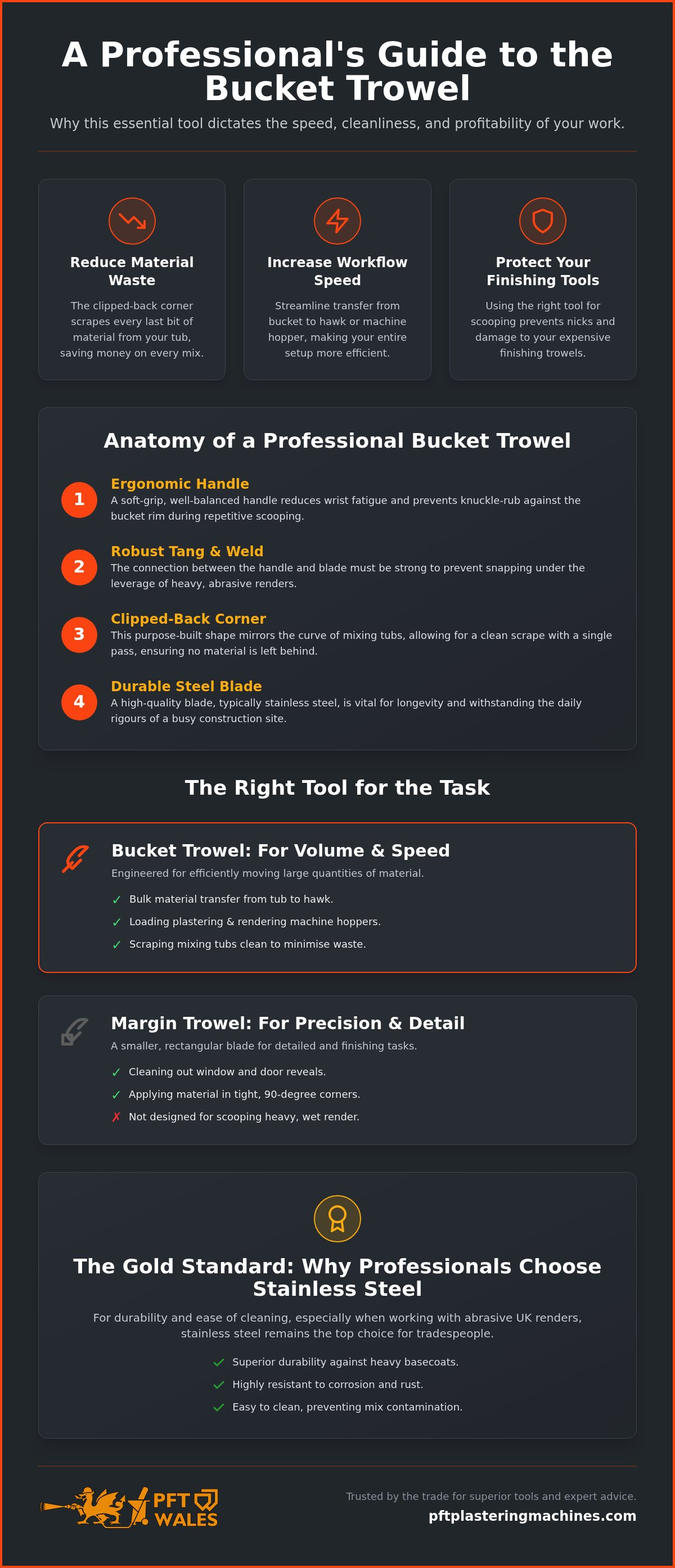
A professional scoop isn't just a generic tool; it's a precision-engineered piece of kit designed for a specific purpose. It features a clipped-back corner specifically shaped to mirror the curve of standard mixing tubs, allowing you to clear the sides with a single pass. While some might reach for a standard Masonry Trowel Types, those are built for laying beds, not for the high-volume transfer required in modern plastering and rendering. The bucket trowel is the essential bridge between the mixing tub and the wall.
The primary role of this tool is the efficient transfer of material from your bucket to your hawk or directly into the hopper of your plastering machines. Making do with a finishing trowel for this task is a fast track to ruining your expensive gear. The sharp edges of a finishing blade aren't meant for scraping plastic or metal buckets; they'll nick, dull, and lose their precision edge within days. Using the wrong tool doesn't just damage your kit, it breaks your rhythm and slows down your entire workflow.
To see how these tools perform in a real-world render application, watch this helpful video:
The Anatomy of a Tradesman’s Essential
A pro-grade tool starts with superior blade geometry. The rounded or clipped nose is vital for "scraping the barrel" clean, ensuring no expensive render is left to harden on the bucket walls. You should also pay close attention to the tang and weld strength. Cheap versions often snap at the weld point when under the leverage of a heavy basecoat. A tool that lasts years, rather than weeks, requires a robust connection between the handle and the blade. Finally, consider the size. You want to balance the volume of material you can move with the weight on your wrist to avoid fatigue before the first break of the day.
Why Traditional Scooping Fails the Modern Professional
Think about the hidden cost of wasted material. Leaving just a small amount of mix in the corners of every bucket adds up to significant waste over a year of work. Traditional flat blades can't reach those curves, often leaving behind material that creates lumps or air pockets in your subsequent batches. Ergonomics play a massive role here too. Using a tool designed for the job reduces repetitive strain during the prep phase. A well-balanced bucket trowel with a comfortable grip ensures that the repetitive motion of scooping doesn't lead to long-term injury, keeping you productive on site.
Bucket Trowels vs Margin Trowels: Which One Earns Its Space?
Many new starters on site assume that one small trowel is as good as another. It's a mistake that leads to wasted time and broken kit. The fundamental design differences between these tools are there for a reason. While a margin trowel features a flat, rectangular blade, the bucket trowel is specifically engineered with curved or clipped edges to mirror the internal shape of your mixing tub. To work at a professional pace, you need to find the right plastering trowel for your next project based on whether you're focusing on detail or volume.
Having both in your kit isn't about being fancy; it's the hallmark of a professional setup. One tool handles the precision, while the other manages the mass. Using them interchangeably is a quick way to fatigue your wrists and leave your buckets in a mess.
The Margin Trowel: Precision Over Volume
The margin trowel is your surgical instrument. It's the tool you reach for when cleaning out window reveals, reaching into tight 90-degree corners, or performing detailed patching where a larger blade would be clumsy. However, its narrow profile is its biggest limitation. It's useless for bulk material transfer. Because margin trowels are typically made from thinner steel, they're much more prone to snapping at the neck if you use them to scoop heavy, wet render or try to force them through a stiff mix.
The Bucket Trowel: Efficiency and Mix Management
When it comes to moving material fast, the bucket trowel is king. It's designed for volume, allowing you to transfer large amounts of render or plaster to your hawk or machine hopper in seconds. A high-quality model often incorporates an ergonomic grip to help manage the weight of the wet mix without causing repetitive strain.
Beyond just scooping, this tool provides a "clean wall" effect. By perfectly scraping the sides of the bucket, you prevent dried crusts from forming. If those crusts fall into your fresh mix, they'll create lumps that ruin your finish. These tools are built with thicker, more durable steel to handle the constant leverage of wet material, ensuring they survive the rigours of daily site use. If you're upgrading your kit and need a hand choosing between specific blade weights, feel free to speak with our technical team for a recommendation based on the materials you're running.
Engineering the Perfect Scoop: Materials and Ergonomics
A pro-grade bucket trowel is more than just a piece of stamped metal. It's a carefully balanced instrument where the metallurgy and handle design work together to keep you productive on site. When you're moving hundreds of kilos of material a day, the weight distribution of your tool becomes a health and safety consideration. A well-balanced trowel reduces long-term fatigue amongst tradespeople, preventing the wrist strain that can sideline a good spreader for weeks. At PFT Wales, we select plastering trowels that meet these exact professional standards.
Using a stainless steel blade is the only way to guarantee you won't leave behind microscopic rust particles that can blossom into unsightly orange spots in a pristine white monocouche finish. It's a simple choice that protects your reputation and your profit margin.
Stainless Steel vs Carbon Steel Blades
For most UK renderers, stainless steel is the non-negotiable gold standard. Its primary advantage is total rust resistance and ease of cleaning, which is essential when working with modern thin-coat renders and monocouche. Whilst carbon steel is a traditional favourite because it can hold a slightly sharper edge, it requires constant oiling and maintenance to prevent corrosion. In the abrasive environment of a rendering site, stainless steel stands up best to the physical wear and chemical bite of the materials. It stays smooth, cleans up with a quick splash of water, and won't contaminate your mix.
Handle Design and Grip Comfort
The days of the basic wooden stick are largely over for high-volume work. Modern bi-material grips, like those found on Skimflex professional plastering tools, are designed to absorb vibration and prevent blisters during long shifts. These soft-grip handles provide much better purchase when your hands are wet or covered in dust.
One feature you should never overlook is the "finger guard". This small extension on the handle protects your knuckles from the sharp rim of the bucket during aggressive scooping. It's a small detail that makes a massive difference when you're working at pace. That said, some old-school plasterers still prefer traditional wood handles. They value the natural "breathability" of the timber, which can feel less sweaty in high temperatures, provided the wood is high-quality and properly seated to the tang.
Selecting Your Trowel for Specific Materials and Machine Prep
Not all mixes are created equal. A bucket trowel that excels at scooping light internal skim might struggle when faced with the weight of a polymer-modified basecoat. Professional efficiency depends on matching the tool's rigidity to the material's density. This is especially critical for those integrating machine plastering workflows into their day. In these setups, the tool's role shifts from simple material transfer to a vital part of machine maintenance and hopper management. If you're looking to scale up your operations, explore our professional guide to plastering machines to see how the right kit integrates into a modern UK site.
Maintaining your equipment is just as important as the initial selection. A simple cleaning ritual after every batch will extend the life of your blade significantly. Never let material dry on the steel; a quick scrub in a water butt keeps the edge sharp and the surface smooth for the next scoop.
Trowels for Heavy Renders and Basecoats
When you're working with heavy sand and cement or monocouche mixes, you need a stiffer blade. A flexible blade will often bow under the weight of the wet material, making it impossible to clear the bucket wall effectively. For heavy-duty work, a through-tang design is superior to a simple weld. This construction ensures the metal of the blade extends deep into the handle, providing the leverage needed for dense materials without the risk of snapping. For high-volume rendering projects, larger blade sizes are recommended to load your hawk or hopper faster, provided you have the forearm strength to manage the increased weight.
Preparing the Hopper: The Machine Plasterer’s Workflow
If you're running a PFT machine, your bucket trowel is your first line of defence against expensive downtime. Use it to clear any stray dry material from the edges of the mixing shaft before it can fall into the wet zone and create a blockage. Clean prep tools ensure that only correctly hydrated mix enters the pumping system. This level of cleanliness is vital when switching between different materials or colours. Even a tiny amount of old, dark basecoat clinging to the side of a tub can contaminate a fresh batch of white topcoat, leading to a finish that won't pass a client's inspection.
Ensuring your prep tools are as clean as your machine is the secret to a snag-free day. If you need advice on specific tool compatibility for your machine setup, contact our technical team at PFT Wales for expert support and guidance.
Why Professional Trades Choose Skimflex and Refina at PFT Wales
When you're buying a bucket trowel, you're investing in your daily productivity. At PFT Wales, we don't just shift boxes; we curate a range based on 16 years of hands-on industry experience. We understand that a tool failing on a Monday morning can derail your entire week. That's why we've positioned ourselves as a specialist supplier of Refina and our proprietary Skimflex range. These aren't just brands; they're the benchmarks for durability on UK sites. They stand up to the abrasive nature of modern renders whilst maintaining the balance needed for all-day use.
Choosing the right supplier is as important as choosing the right steel. As an authorised PFT dealer, we bridge the gap between high-end machinery and the hand tools needed to prep them. You can browse the full Skimflex tool range to see how we've applied European engineering to the specific needs of the British trade. We don't believe in selling kit that we wouldn't be happy to use ourselves.
The Skimflex Advantage: Built for Longevity
Skimflex is our own brand, and we've poured over a decade of technical knowledge into its development. We source these tools from the finest European manufacturers in Poland, Austria, and Germany. This ensures you're getting high-grade steel and robust welds that won't snap when you're levering a heavy mix out of a tub. Because these tools are designed by tradespeople for tradespeople, we focus on the details that actually matter on a wet site. You get a professional standard tool that offers excellent value without compromising on the rigours of daily site use.
Authorised Expertise and National UK Delivery
We know that when a tool breaks, you need a replacement yesterday. That's why we offer mainland UK coverage with express shipping options for those urgent site requirements. For our Skimflex range, we provide free Royal Mail Tracked 48 delivery as standard, with next-day upgrades available if you're in a real bind. We don't do Saturday deliveries, but our weekday service is designed to get kit into your hands as fast as possible.
Buying from PFT Wales means you're getting more than just a delivery. You're getting access to a team that knows these tools because we use them. Whether you need advice on which bucket trowel suits a specific monocouche or you're looking for machine training, our expert technical advice is just a phone call away. We're here to support the working professional, ensuring you have the kit and the confidence to get the job done right.
Master Your Workflow with Professional Prep Tools
Success on site is often built on the small details that others overlook. Moving away from "making do" with standard blades and investing in a purpose-built bucket trowel is a simple shift that pays dividends in speed and material savings. By choosing a tool with the correct geometry and ergonomic grip, you protect your health whilst ensuring every batch of render or plaster is transferred efficiently without contamination or waste.
At PFT Wales, we've spent 16 years refining our selection to include only the gear that survives the rigours of the UK trade. As an authorised supplier for Refina and PFT, we pride ourselves on providing Skimflex tools that are engineered in Europe specifically for professional use. Whether you're hand-applying or managing a complex machine hopper, having the right kit makes the hard graft that bit easier. If you're ready to improve your setup or need technical advice on tool compatibility, upgrade your kit with professional bucket trowels from PFT Wales. It's time to keep your buckets clean and your finishes flawless.
Frequently Asked Questions
Is a bucket trowel better than a margin trowel for mixing?
A bucket trowel is significantly better for bulk mixing and material transfer because its curved blade fits the bucket's shape perfectly. Whilst a margin trowel is excellent for precision detail in tight corners, it lacks the surface area for efficient mixing. Using a margin trowel for heavy scooping often leads to snapped welds. In contrast, the bucket trowel ensures every bit of mix is incorporated without leaving dry material clinging to the sides.
Why do professional bucket trowels have a clipped corner?
The clipped or rounded corner is specifically designed to mirror the internal radius of standard mixing tubs. This allows you to scrape the walls and bottom of the bucket perfectly clean with a single pass. It prevents wasted material and stops old, crusty render from falling back into your fresh mix. It's this small design feature that makes the bucket trowel the essential bridge between your tub and the hawk.
What is the best material for a bucket trowel blade?
Stainless steel is generally considered the gold standard for UK plasterers and renderers. It offers total rust resistance and is much easier to clean after a shift. This is vital when working with modern monocouche or thin-coat renders where rust contamination can ruin a finish. Carbon steel is an alternative that holds a sharper edge, but it requires much more maintenance and oiling to prevent corrosion in wet environments.
How do I stop my bucket trowel from rusting?
The simplest way to prevent rust is to choose a high-quality stainless steel bucket trowel from brands like Skimflex or Refina. If you prefer carbon steel, you must develop a strict cleaning ritual. Always wash the blade thoroughly after use, dry it immediately, and apply a light coat of oil. Never leave your tools sitting in a wet bucket overnight, as even the best steel will eventually show signs of fatigue.
Can I use a bucket trowel for scraping down my plastering machine?
You can and should use a bucket trowel to maintain your machine hopper and mixing shaft. Its shape is perfect for clearing stray material from the hopper walls before it hardens. Keeping these areas clean ensures only the correct mix enters the pump, preventing blockages in your PFT machine. However, always ensure the machine is switched off and isolated before putting any hand tools near moving parts like the mixing shaft.
Are Skimflex bucket trowels suitable for heavy rendering?
Skimflex bucket trowels are specifically engineered for the rigours of heavy rendering and basecoat applications. Sourced from top European manufacturers in Poland, Austria, and Germany, they feature high-grade steel and robust welds designed to handle the weight of wet sand and cement. They provide the necessary stiffness to clear thick material from a tub without bowing or snapping, making them a durable choice for professional contractors across the UK.
What handle type is best for a plasterer’s bucket trowel?
Most modern professionals prefer bi-material soft-grip handles, such as the Durasoft range. These grips absorb vibration and provide better purchase when your hands are wet or covered in dust. They also help prevent blisters during long shifts. Traditional wooden handles are still available and valued for their breathability, but for high-volume work, an ergonomic handle with a finger guard is usually the best choice for protecting your knuckles from the bucket rim.
How long should a professional bucket trowel last?
A professional-grade tool from a trusted supplier like PFT Wales should last for several years with proper maintenance. Whilst cheap DIY versions often snap at the weld within weeks, pro tools like Refina or Skimflex are built for daily site use. The lifespan depends on your cleaning habits and the abrasiveness of the materials you use. Regularly clearing the blade and storing it dry will ensure your investment serves you well for many projects.