

How many more years can your joints handle the relentless grind of manual mixing and hand-applying every single bag of material? It's a question many tradespeople avoid until the physical burnout becomes impossible to ignore. Finding skilled labour is tougher than ever, and site failures due to inconsistent mixes are a headache nobody needs. Understanding how pft machines improve plastering efficiency isn't just about buying a new piece of kit; it's about evolving your business to survive a demanding industry.
We agree that the traditional ways have their place, but the sheer volume of work required in 2026 demands a faster, more ergonomic approach. This guide shows you how transitioning to PFT machinery slashes your application times and significantly increases your daily metreage. We'll explore the technical advantages of continuous mixing, the reduction in physical strain, and how PFT Wales supports you with machines, genuine parts, and specialist tools from Refina and Skimflex... everything you need to stay ahead. From superior finish consistency to career longevity, it's time to see what your business is truly capable of achieving.
Key Takeaways
- Learn how pft machines improve plastering efficiency by automating the water-to-material ratio and eliminating the stop-start nature of manual bucket mixing.
- Discover why moving away from manual application protects your physical health from long-term trade injuries whilst significantly increasing your daily metreage.
- Understand the critical relationship between genuine rotor and stator maintenance and machine flow speed to avoid costly mid-job breakdowns.
- Compare the output of manual teams against machine-led crews to see how uniform application thickness slashes waiting times for drying.
- Explore why professional training and technical support from specialists is the fastest route to a positive return on your machinery investment.
The Manual Bottleneck: Why Traditional Plastering Limits Your Growth
The UK construction industry in 2026 is moving at a pace that manual methods simply can't match. If you're still relying on a drill and a paddle, you're fighting a losing battle against the clock. Traditional plastering methods have served the trade for centuries, but modern site demands require a level of output that breaks even the hardest workers. Manual mixing is a constant drain on your resources through a repetitive three-stage cycle:
- Site preparation and setting up multiple mixing stations.
- Manual batch mixing of individual bags with the risk of water ratio errors.
- Physically transporting heavy buckets from the mixing point to the wall.
This stop-start rhythm creates a bottleneck that prevents you from scaling up your business. It's here that understanding how pft machines improve plastering efficiency becomes vital; by turning a batch process into a continuous flow, you reclaim the hours usually lost to the mixing tub. When you see how pft machines improve plastering efficiency across a whole project, the decision to switch becomes a matter of professional survival.
The Metreage Ceiling of Hand Application
A typical two-man team working manually has a hard limit on what they can achieve in a shift. By the time you've humped bags, mixed up, and got the gear on the wall, the most productive hours of the morning are gone. Fatigue isn't just about feeling tired; it directly impacts the quality of your finish. As the day goes on, your arms get heavier and your pace slows down. Inconsistent hand-mixed batches also increase the risk of material waste or site failures if the mix isn't identical every time. Using PFT plastering machines removes this ceiling, allowing you to focus on the finish rather than the grunt work.
Ergonomics and Career Longevity
We've all seen mates leave the trade early because of "plasterer’s shoulder" or chronic lower back pain. The repetitive strain of manual floating and the constant heavy lifting of buckets takes a massive toll over a twenty-year career. It's a physical burnout that many see as part of the job, but it doesn't have to be. Modern spray equipment and Skimflex tools are designed to take the weight off your joints. By letting the machine do the heavy lifting and the pumping, you reduce the mechanical stress on your body. This is a smarter way to work that prioritises your longevity. PFT Wales doesn't just sell kit; we provide the training and technical support to ensure you're using these machines in a way that protects your health and your livelihood.
The Science of Spray: How PFT Mixing Pumps Optimise Workflow
A PFT mixing pump is more than just a delivery system; it's a precision-engineered unit that automates the water-to-dry-material ratio. By controlling this mix at the source, the machine ensures that every square metre on the wall is identical in composition. This automation is at the core of how pft machines improve plastering efficiency. Instead of relying on a worker's "feel" for the mix, which can fluctuate with fatigue or distraction, the machine maintains a constant, perfect consistency throughout the entire shift.
The "Continuous Mix" advantage is the real profit booster for modern tradespeople. In a traditional setup, stopping to mix a new bucket is a momentum killer. It's dead time where no material is being applied to the substrate. With a PFT mixing shaft, the dry material and water meet in a controlled chamber, providing a constant stream of wet product. This transition from manual conveying to mechanical spraying eliminates the need for labourers to lug heavy buckets across the site, allowing the team to focus entirely on the application and finish.
Automated Consistency and Material Integrity
Consistency isn't just about ease of use; it's about meeting the rigorous quality standards expected in modern construction. PFT machines prevent the common site issues of "dry spots" or overly wet mixes that lead to cracking or poor adhesion. By ensuring the material integrity is never compromised, you reduce the risk of costly call-backs. Machines like the PFT G4 or Ritmo create a uniform mixing zone where the material is fully aerated and hydrated before it ever reaches the hose. If you're unsure which machine fits your specific material needs, it's always best to speak with a technical expert for advice.
The Role of the Rotor and Stator
The rotor and stator assembly acts as the heart of the machine's efficiency, providing the necessary pressure to move material through the hose. Different rotors and stators are specifically tailored for different materials, from thin-coat plasters to heavy-duty renders. To maintain peak flow rates and avoid energy-sapping friction, using genuine PFT parts is non-negotiable. When these components work in harmony with the mixing shaft, the result is a smooth, reliable spray pattern that makes the finishing stage significantly faster. Investing in a high-quality PFT plastering machine ensures your workflow remains uninterrupted by the inconsistencies of manual prep.
Quantifying Efficiency: Speed, Consistency, and Metreage Gains
Efficiency isn't just a buzzword; it's a measurable increase in your bank balance at the end of the week. Realising how pft machines improve plastering efficiency requires looking at the raw output from a typical site day. When you stop mixing by the bucket and start spraying, the workflow shifts from a series of exhausting sprints to a steady, high-volume marathon. This allows you to finish projects ahead of schedule without sacrificing the quality of the substrate.
Comparing Manual vs. PFT Machine Output
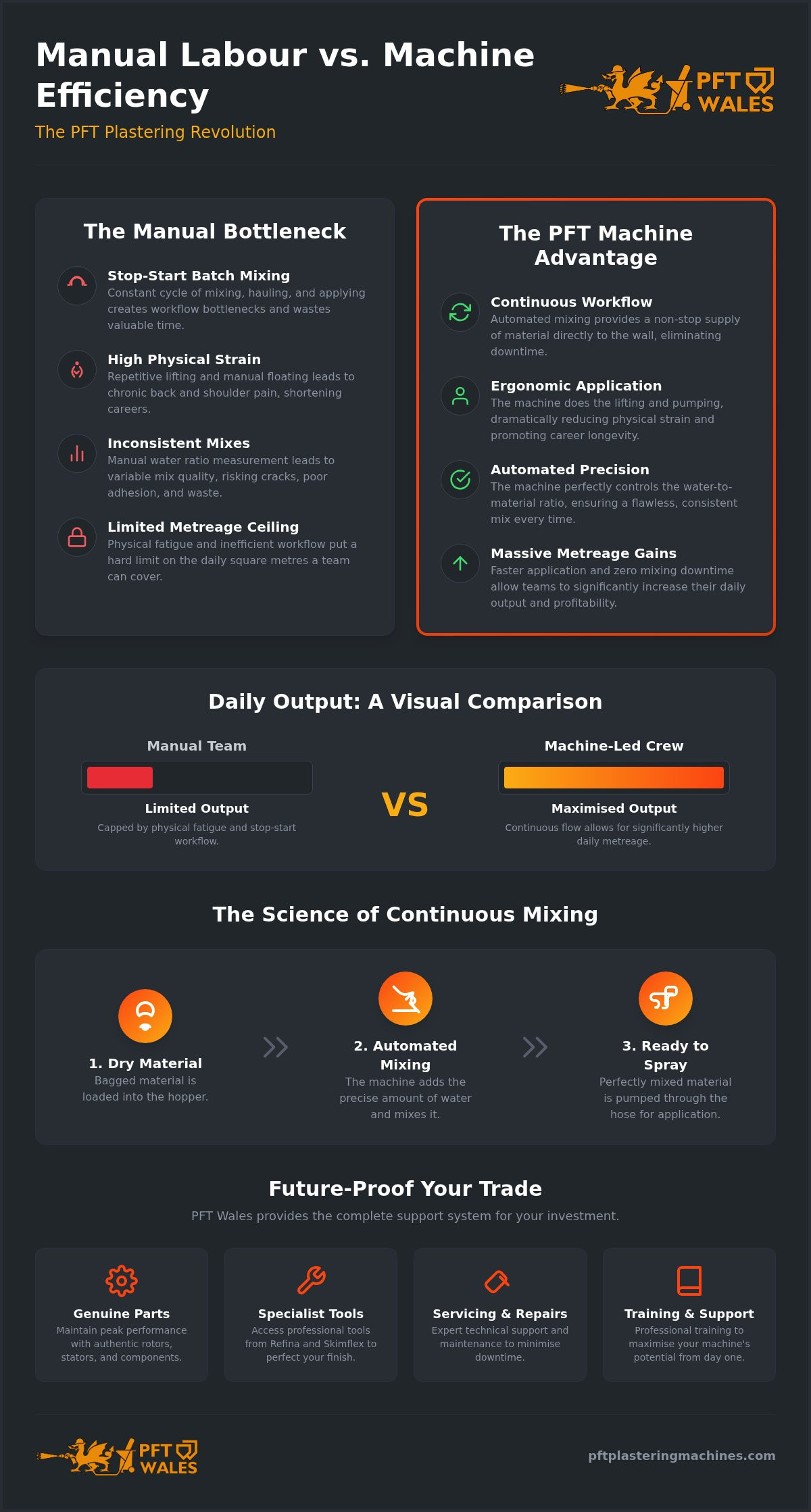
The difference in output between a traditional crew and a machine-led team is substantial. A standard two-man manual team is often limited by the physical endurance required to mix and apply material by hand. In contrast, teams using PFT plastering machines can achieve a significantly higher daily output. The following comparison highlights the operational shift seen when moving to mechanical application:
| Operational Task | Manual Team (2-Man) | PFT Machine Team (2-Man) |
|---|---|---|
| Mixing Process | Batch-based; physical lifting and tubs | Continuous; automated water-to-powder ratio |
| Application Method | Hand-trowelled; physically taxing | Mechanical spray; sustained high-speed |
| Daily Metreage | Limited by fatigue and batch times | Significantly increased daily output |
| Cleanup Effort | Multiple buckets and tools | Streamlined machine flush |
On large residential sites or high-rise commercial projects, the ability to pump material vertically is a game-changer. You no longer need a chain of labourers moving buckets up scaffolding or through tight corridors. This reduction in manual handling means you can do more work with fewer people on the wall. This shift in workflow is the primary reason how pft machines improve plastering efficiency for modern UK contractors.
Consistency as a Profit Driver
Uniformity isn't just about looks; it's about your profit margin. Machine application provides a uniform thickness that hand-application can't easily match. Manual spreads often have thin and thick patches, which means the wall dries at different rates. This forces you to wait around for damp patches to go off before you can start the final finish. A machine-sprayed wall dries evenly, letting you get on with the finish and get off site sooner. Fewer snags and callbacks mean you keep more of your hard-earned money while maintaining a cleaner and more organised site environment. To ensure the highest quality results on every project, you can visit Gyp Artisan for premium gypsum boards and finishing solutions.
Maintaining Peak Performance: Rotors, Stators, and System Health
A machine is only as productive as its most worn-out component. Whilst we've looked at the speed gains, a core part of how pft machines improve plastering efficiency is the reliability of the system under pressure. When a rotor and stator begin to wear, the friction increases. This doesn't just slow down the flow; it puts extra strain on the motor and increases energy consumption. Daily maintenance rituals, like thoroughly flushing the system and greasing couplings, aren't just chores. They're the difference between a profitable week and a disastrous breakdown.
Identifying the signs of a failing stator early can save your shift. If you notice a drop in operating pressure or material starting to backflow into the mixing zone, it's time to check your wear parts. Using the correct plastering machine hoses also plays a massive role in system health. The wrong diameter or a worn-out lining can lead to frequent blockages, forcing the machine to work harder than it needs to. When your gear is running at peak performance, you truly see how pft machines improve plastering efficiency through consistent, uninterrupted output.
The Cost of Downtime on a Professional Site
Downtime is the silent killer of profit. If a two-man team suffers a half-day breakdown, you aren't just losing four hours of application time. You're losing the momentum of the job, the cost of wasted material already in the machine, and the potential to start the next project. Keeping a basic stock of PFT machine spares, such as cleaning tools, gaskets, and spare couplings, is essentially a business insurance policy. It's much cheaper to have a spare part in the van than to have a crew standing idle on site. If you're noticing a drop in performance, contact PFT Wales for technical support or to book a professional service.
Optimising the Spray Pattern
The efficiency of your application depends heavily on the quality of your spray fan. This is where the relationship between the pump and the compressor becomes critical. If your air pressure is inconsistent, your spray pattern will be lumpy, forcing you to spend more time with the spatula or straight edge. Troubleshooting common flow issues often comes down to checking your nozzle for wear or ensuring your air hoses are free from kinks. A well-maintained compressor ensures the material is perfectly atomised, creating a uniform coat that's much faster to level. When the system is dialled in correctly, the machine does the hard work, leaving you to focus on the precision of the finish.
Future-Proofing Your Trade with PFT Wales Support
Investing in a mixing pump is a significant move for any business, but the machine itself is only one half of the success story. To truly master how pft machines improve plastering efficiency, you need a support network that understands the daily realities of the UK trade. Since 1995, PFT Wales has acted as an expert peer to the industry, providing more than just equipment. We offer a full ecosystem that includes genuine parts, technical servicing, and the professional wisdom earned through decades of hands-on experience. When you partner with an authorised supplier, you aren't just buying a tool; you're securing the future of your career.
The Importance of Specialised Training
We've seen it time and again: a contractor buys a machine, skips the induction, and spends the first month frustrated by simple setup errors. A single day of PFT machine training at our dedicated technical facility saves you weeks of trial and error on site. Learning from experienced tradespeople who know the UK market ensures you understand the nuances of different materials and site conditions. Training also improves site safety, helping you meet the 2026 HSE focus on reducing musculoskeletal disorders and managing dust exposure. It's about protecting your gear and your health, ensuring your equipment has a long, productive life.
Building Your Professional Ecosystem
A PFT machine gets the material on the wall with incredible speed, but the final finish is where your reputation is made. Integrating Skimflex tools into your workflow allows you to flatten and finish machine-applied plaster with absolute precision. By combining high-output machinery with specialist spatulas and trowels from Refina and Skimflex, you create a professional setup that manual teams simply cannot compete with. Our support doesn't end when you leave the showroom. We provide access to technical drawings and parts lists, enabling you to identify exactly what you need for site-side repairs without the guesswork.
Whether you need a full machine service, a specific rotor and stator, or just some honest technical advice, we're here to keep your crew moving. The transition to machine application is the most effective way to scale your business whilst reducing the physical toll on your body. Don't let your growth be limited by outdated methods or unreliable support. Contact PFT Wales to upgrade your efficiency today and see how the right equipment and training can transform your daily profit margins.
Take the Next Step Toward a More Profitable Future
Transitioning from manual mixing to a PFT system isn't just about speed; it's about protecting your health and scaling your business. We've explored how pft machines improve plastering efficiency by automating consistency and removing the physical bottleneck of hand-mixing. By combining high-output machinery with precision tools from Refina and Skimflex, you're not just working faster; you're delivering a superior finish that clients notice.
As an Authorised UK PFT Specialist, PFT Wales provides the full ecosystem of support. From genuine parts and expert servicing to next-day delivery on essential spares, we ensure your team stays productive. Whether you're a two-man team looking to double your daily output or a large contractor managing high-rise projects, the right machinery is your greatest asset. Contact PFT Wales to discuss the right machine for your business and boost your efficiency today. The trade is changing, and those who adapt with the right gear will lead the way in 2026 and beyond.
Frequently Asked Questions
How much faster is a PFT machine compared to hand plastering?
A machine crew typically completes work significantly faster than a manual team because the mixing and application stages are combined into one continuous flow. By removing the need to stop and mix individual tubs, you eliminate the "dead time" that usually eats into your day. This shift in workflow is a primary example of how pft machines improve plastering efficiency, allowing you to cover larger areas with far less physical exhaustion than traditional methods.
Can I use a PFT machine for both internal plaster and external render?
Yes, PFT mixing pumps are highly versatile and can be configured to spray a wide variety of materials. Whether you are applying internal gypsum-based plasters or heavy-duty external renders, the machine provides a consistent mix every time. However, different materials may require specific rotors, stators, or mixing shafts to ensure the correct flow. If you are unsure about material compatibility, contact PFT Wales for technical advice on the best setup for your project.
Do I need a special power supply for a PFT G4 or Ritmo?
Power requirements vary depending on the specific machine model you select. Some machines are designed to work with standard residential power supplies, while larger, more powerful units may require a more robust site power setup. Because using the incorrect electrical supply can lead to component damage or site safety issues, we recommend speaking with our technical team. We can provide the exact electrical specifications for your machine to ensure a safe and reliable setup.
How long does a rotor and stator typically last before needing replacement?
The lifespan of these wear parts is not fixed, as it depends heavily on the abrasiveness of the material being pumped and the operating pressures used. Pumping sand-heavy renders will naturally wear the stator faster than smoother internal materials. To maintain peak performance, you should monitor your flow rate and pressure gauges daily. If you notice a drop in output or inconsistent spray patterns, it may be time to consult PFT Wales about a replacement.
Is it difficult to learn how to operate a PFT plastering machine?
Operating a mixing pump is a skill that can be mastered quickly with the right guidance. Whilst the machines are technically advanced, the core principles of operation are logical and trade-focused. Attending a specialised training day at our dedicated facility is the most effective way to understand how pft machines improve plastering efficiency. This hands-on support ensures you can set up, operate, and clean the equipment safely, avoiding the common mistakes that can lead to site delays.
What are the most common causes of blockages in plastering machines?
Blockages usually occur due to inconsistent water supply, poor cleaning routines, or using worn-out hoses with damaged internal linings. If the mix is allowed to become too dry within the system, or if old material has built up in the couplings, the pump will struggle to maintain pressure. Maintaining a clean system and using genuine PFT parts is the best way to prevent these issues. If you encounter persistent blockages, our technical support team is available to help troubleshoot.
How does machine plastering help in meeting building quality standards?
Machine application provides a superior level of consistency and aeration that is difficult to replicate by hand. By ensuring the material is applied at a uniform depth across the entire substrate, you reduce the risk of uneven drying, which can lead to cracks or bonding failures. This level of precision ensures your work meets the high quality requirements of modern UK construction sites, leading to fewer snags and a more professional finish for your clients.
Can I buy used PFT machines and still get technical support?
Yes, we support the entire lifecycle of PFT machinery, whether you have purchased a brand-new unit or a refurbished model. PFT Wales provides genuine spares, technical drawings, and professional servicing for a wide range of machines. Even if you have acquired a used machine elsewhere, you can still access our training and technical expertise. This ensures your equipment remains a reliable asset for your business, helping you maintain high productivity and consistent site results.