

Choosing a steel finishing tool is easier when you start with the job, not the product label. The right format depends on the task and your working method, and a tool used to finish a surface is not necessarily the same choice as one used to apply material.
Product listings do not always make comparisons straightforward. Shape, dimensions, handle details and stated material can help you assess whether a tool is worth considering, but missing information should not be guessed from a photograph or product name. This guide shows you what to check, what to ask and how to compare options against the finish you need.
We’ll look at application, blade details and handling, with examples of professional tool ranges from Refina and Skimflex, supplied by PFT Wales. Where a listing does not confirm a detail such as blade material, dimensions or intended use, check with the supplier before deciding. The aim is to help you choose using clear product information rather than broad marketing claims.
Key Takeaways
- Start with the task and finish you need, then compare tool categories rather than relying on a product label alone.
- Check the exact product listing for its shape, stated dimensions, handle details and confirmed material.
- Category names can vary between sellers, so confirm the intended application before choosing.
- Consider your working area and handling preferences. Assess the tool yourself where possible.
- Browse professional tools from Skimflex and Refina, and ask PFT Wales for advice if a product detail or its suitability is unclear.
What is a steel finishing tool, and when is it useful?
A steel finishing tool is a hand tool used to refine a plaster or render surface during finishing work. The term covers more than one shape or specification. Sellers may also use product names differently, so read the description and manufacturer information to confirm the tool’s stated construction and intended task.
Begin with the job. A tool intended for finishing is not automatically suited to mixing, applying material or preparing a surface. Note the material, the area you’re working on and the finish required, then compare those needs with the product’s confirmed details.
The following video is titled as a demonstration of a machine for sanding metal tools. It concerns tool finishing rather than plastering technique.
Which plastering and rendering tasks call for a finishing tool?
A finishing tool may be considered when refining a surface, for example during work on a skim coat or a render finish. These are examples, not a recommendation that one tool is suitable for every material or job. Check the product’s stated application against the work you plan to do.
Keep the stages of the job distinct. Mixing tools prepare material, application tools help place it, and preparation tools address the surface before finishing. If a product name does not make its role clear, check the maker’s description or ask the supplier before buying.
How is a steel finishing tool different from other plastering tools?
The main difference is the intended task, although product categories can overlap. A trowel is a broad tool category, and some trowels are designed for finishing plaster. You can read a general explanation of the finishing trowel, but check the description of a specific product to confirm its details. Spatulas are another category of hand tool; the name alone does not establish an item’s precise role or construction.
When comparing tools, look at the shape, stated dimensions, material and intended task rather than assuming that finishers, trowels and spatulas are interchangeable. Your working method and the material also matter. For wider context on choosing equipment for different jobs, see this professional plastering tools guide.
PFT Wales supplies professional tools from Refina and its own Skimflex range. Browse Skimflex professional tools and check each listing for confirmed details. If the intended use or specification is unclear, ask the supplier before choosing.
How to compare steel finishing tools before you buy
A product name is only a starting point. Compare the details that determine whether a tool may suit the job, and separate confirmed information from unanswered questions. Do not fill gaps using assumptions based on a photograph or broad category label.
Use the checklist below to compare products side by side. Record a detail only when it appears in the exact product listing or has been confirmed by the manufacturer.
Which blade details should you check?
Look for the blade’s stated dimensions and shape in the listing for the exact product. If either detail is missing, ask the supplier rather than estimating from an image. No single size or profile is automatically right for every task. Treat claims about flexibility, edge performance or durability as unverified unless reliable information for that product supports them.
How should handle and balance affect your comparison?
Grip, reach and balance are personal considerations. If you can handle the tool, assess it against your usual working position and method. If you cannot, ask for confirmed handle details, but do not assume a particular design will improve comfort or reduce fatigue. For a related comparison, browse plastering trowels and their formats.
Quoted summary: “Verified specifications matter more than a generic label: confirm the intended application, dimensions, shape, handle and material for the exact tool before deciding.” For wider context on construction skills, HBI provides information about trade training. That is separate from product verification and cannot confirm a tool’s specifications. Use reliable details when sourcing a steel finishing tool with confidence.
If a listing leaves key details unclear, contact PFT Wales for tool advice before choosing.
Steel finishing tool or plastering trowel: which should you choose?
Start with the job, not the label. “Steel finishing tool” and “plastering trowel” may refer to overlapping categories, depending on how a seller describes the product. Neither name confirms the exact construction, intended application or suitability for a particular finish.
Compare the product information with your task and working method. Check the stated purpose, shape, dimensions and material. Then consider whether the tool’s form and handling suit the work. Do not assume that one category is always better or that products with similar names are interchangeable.
When is a plastering trowel the more relevant category?
A plastering trowel is a broad tool category. If you’re considering one, look for product details that explain its intended task rather than treating “trowel” as a complete description. Confirm the dimensions and construction in the specific listing, and check any claims about use against manufacturer information. For an introduction to the range of equipment used in the trade, see these resources.
When might another finishing tool suit your method better?
That depends on the work area, the finish required and how you handle tools. A differently named finishing tool may be worth comparing if its verified details fit your task. Do not infer performance from its name or assume it is suitable for a particular material. Assess spatulas as a separate category, not as a synonym for steel tools.
Use a straightforward comparison before choosing:
- Task: What stage of the work is the tool intended for?
- Product details: Are the shape, dimensions and material clearly stated?
- Working method: Does the tool’s described form suit how and where you work?
- Unanswered points: What should you confirm with the supplier or manufacturer?
PFT Wales supplies professional tools from Refina and its own Skimflex range. Review the Skimflex professional tool listings, then check each product description for confirmed specifications and intended use. The category name is a starting point, not proof of suitability.
If you’re weighing up two options, compare their verified details first. Ask PFT Wales for tool advice if an application or specification is unclear.
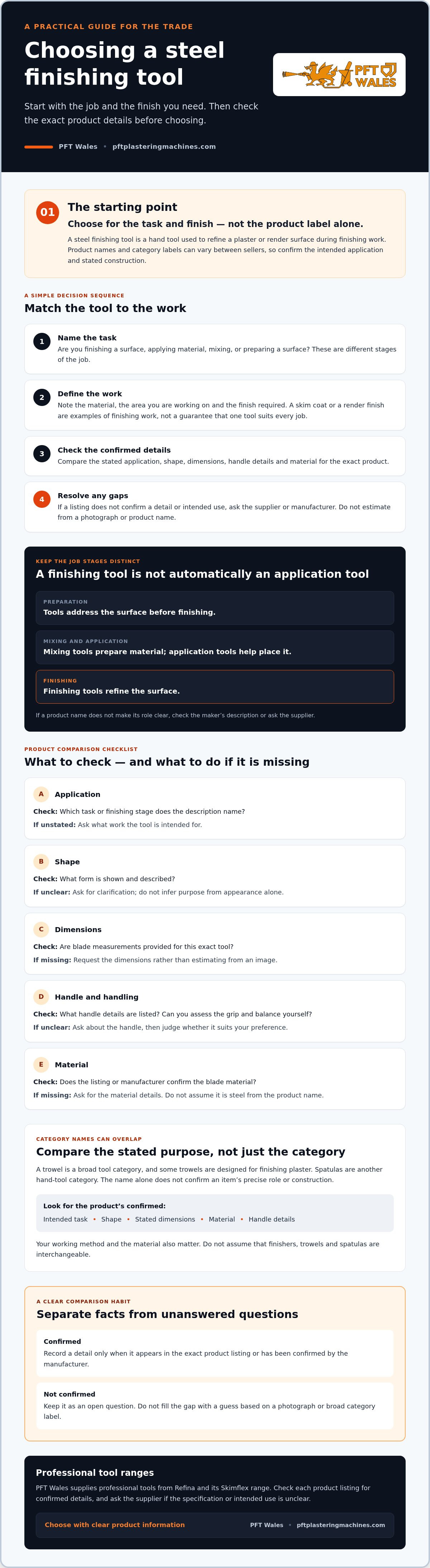
How to match a steel finishing tool to your job
Choose according to the work in front of you, not a broad product label. Before comparing tools, note the material, finish, working area and method you usually use. A product description can help narrow the options, but it cannot confirm suitability if important application details are missing.
Use this process to make the comparison:
- Identify the task. Establish whether you’re working on plaster, render or another specified application, and which stage of the job the tool is intended to serve.
- Check verified details. Read the exact product listing for its name, stated material, dimensions, shape and intended use. Don’t infer missing information from photographs or category names.
- Assess handling. Consider the grip, reach and balance in relation to your working position and preferences. If you can handle the tool, judge it for yourself; otherwise, ask for the relevant details.
- Confirm suitability. If compatibility with the material or application isn’t clearly stated, check with the supplier or manufacturer before deciding.
What should you establish about the job first?
Be specific about the work. “Finishing a wall” gives you less to compare than identifying the material, the area and the finish required. Note whether access or a confined working area affects how you handle tools, and include your usual working method in the comparison. These details help you frame questions for the supplier, but they do not prove that a particular tool is suitable.
What should you verify in the product listing?
Check that the listing matches the exact product you’re considering. Then look for confirmed material, blade dimensions, shape and intended application. If any detail is absent, treat it as a question rather than filling the gap with an assumption. Review PFT Wales’s Skimflex professional tool listings in the same way. Do not assume that every tool in the range has the same construction or use.
A careful match depends on both sides of the decision: what the job requires and what the product information actually confirms. If you’re unsure whether a tool suits your material or application, contact PFT Wales to check the details before choosing.
Choosing and sourcing a steel finishing tool with confidence
Make your choice by matching the job to confirmed product information, then checking that the handling suits your usual method. Before ordering, run through this checklist:
- Task: Identify the material, stage of work, working area and finish you need.
- Specifications: Confirm the exact product name, stated material, dimensions, shape and intended application in the relevant listing or manufacturer information.
- Handling: Consider the handle, grip, reach and balance against your preferences. Avoid relying on general claims about comfort or performance.
- Support: If a key detail or suitability is unclear, ask the supplier to clarify it or direct you to the manufacturer’s information.
A listing that does not confirm the blade material, dimensions or intended use leaves an unanswered question, not permission to assume. Telephone technical advice can help you understand the information available, but it does not make an unverified detail confirmed. If you need a manufacturer-specific fact, ask for it to be checked against the relevant information.
When should you ask a supplier before ordering?
Ask before ordering if the listing does not state what the tool is designed for or leaves its dimensions or material unclear. Explain the task and material you’re working with, then ask what product information supports its suitability. If the answer cannot be verified, seek confirmation from the manufacturer rather than relying on a general category label.
What should you compare across professional tool ranges?
Compare like with like: the stated purpose against your task, published dimensions against the working area, and described handling details against your preferences. PFT Wales supplies its own Skimflex tools as well as tools from Refina. These are separate ranges, so check each product listing on its own terms rather than assuming equivalent construction or performance. Review the Skimflex professional tool range and apply the same checks to any Refina option you’re considering.
Choose a steel finishing tool only when its confirmed details fit the demands of your work. For help checking product information or suitability, contact PFT Wales for tool guidance.
Make your next tool choice with confidence
The right steel finishing tool is the one whose confirmed purpose and specifications suit the work, not simply the one with the most familiar label. Compare the stated application, dimensions, material and shape, then consider whether the handling fits your working method. If a listing leaves key details unclear, check before ordering rather than guessing.
PFT Wales supplies professional plastering tools from Skimflex and Refina to customers throughout mainland UK. Telephone technical advice is available if you’re unsure about a product’s stated details or suitability. Confirm material and application claims against the relevant product or manufacturer information.
Contact PFT Wales for professional tool advice to review the information available for the tool you’re considering. With the task clearly defined and verified details to compare, you can make a considered choice.
Frequently Asked Questions
What is a steel finishing tool?
A steel finishing tool is a plastering or rendering tool category used during finishing work. The name alone does not confirm the exact material, shape or intended task, as suppliers may describe tools differently. Check the individual product listing for its stated construction, dimensions and application. If a detail is missing, ask the supplier to clarify it before deciding whether the tool suits your work.
Is a steel finishing tool the same as a plastering trowel?
Not necessarily. Sellers may use these category names in overlapping ways, but a product name does not confirm its form, construction or intended task. Compare the specific tool’s description with the work you need to do, and check the stated dimensions and material rather than relying on a label. If you cannot tell whether a product is a finishing trowel or another format, ask the supplier to explain its description.
How do I choose the right steel finishing tool?
Start with the task and finish you need. Then check the exact product’s stated application, material, dimensions, shape and handle details. Consider whether its format suits your working area and usual method. General performance claims are not proof unless supported by the listing or manufacturer information. If a key specification or intended use is unclear, confirm the details with the supplier before choosing.
Can I use a steel finishing tool for both plaster and render?
Do not assume that every tool is suitable for both plaster and render. Suitability depends on the individual tool and the guidance provided by its supplier or manufacturer. Check the stated intended application against the material and system you’re working with. If the listing does not confirm suitability, ask for technical advice before use. A broad category name is not enough to establish that a tool is appropriate for a particular job.
What details should I check before buying a steel finishing tool?
Check the exact product name, intended application, stated material, dimensions, shape and handle details. Compare these with your job requirements, including the working area and your handling preferences. Do not estimate measurements from a photograph or assume construction from the product title. If the listing leaves a detail unanswered, ask the supplier to clarify it before ordering.
Are all Skimflex finishing tools made from steel?
No. PFT Wales supplies Skimflex professional plastering tools, including trowels and knives, but that does not mean every tool in the range is made from steel. Check the individual product listing for its material and other specifications. If the construction is not stated clearly, contact PFT Wales for advice. Confirm the details for the specific tool rather than assuming products in the same range share identical specifications.
Where can I get advice on choosing a professional finishing tool?
A specialist supplier can help you interpret a product listing and identify which details need confirming for your job. PFT Wales supplies professional tools from Skimflex and Refina, and telephone technical advice is available. Explain the task and share the product details you’ve checked. Ask about any unstated material, dimensions or application, and seek manufacturer confirmation where a detail needs to be verified at source.